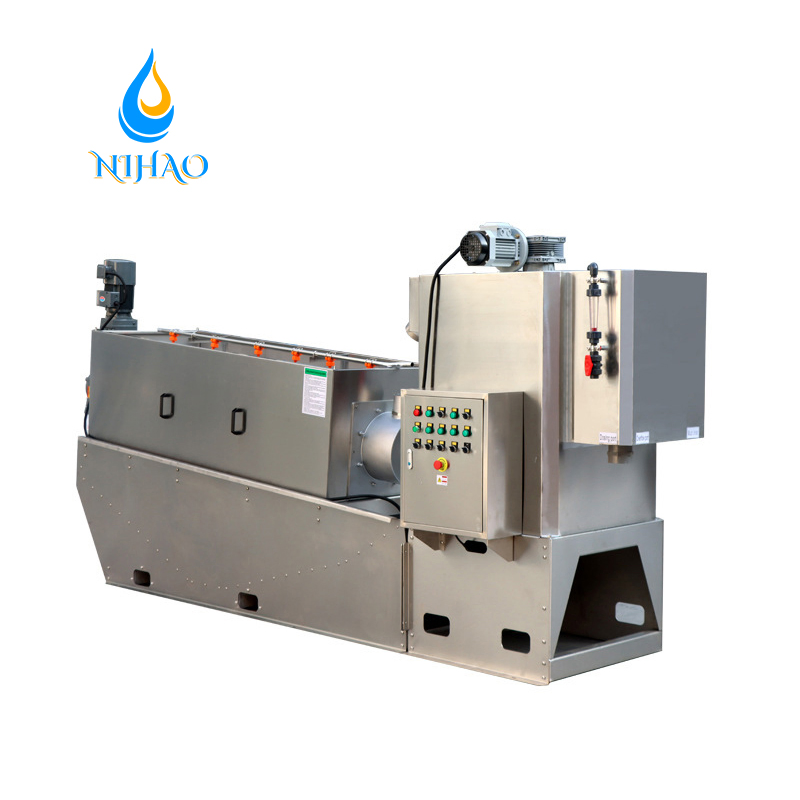
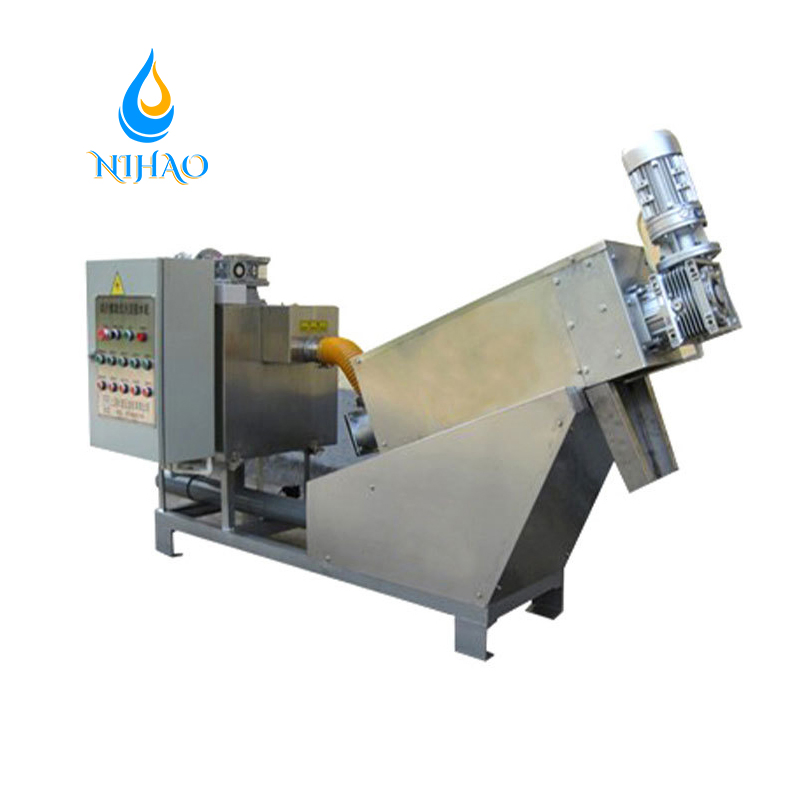
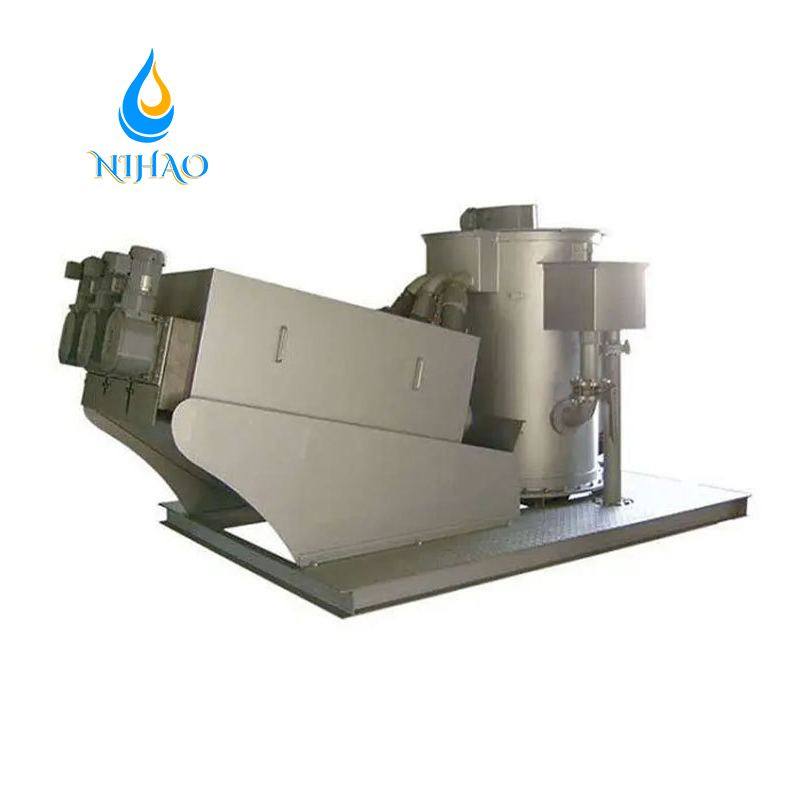
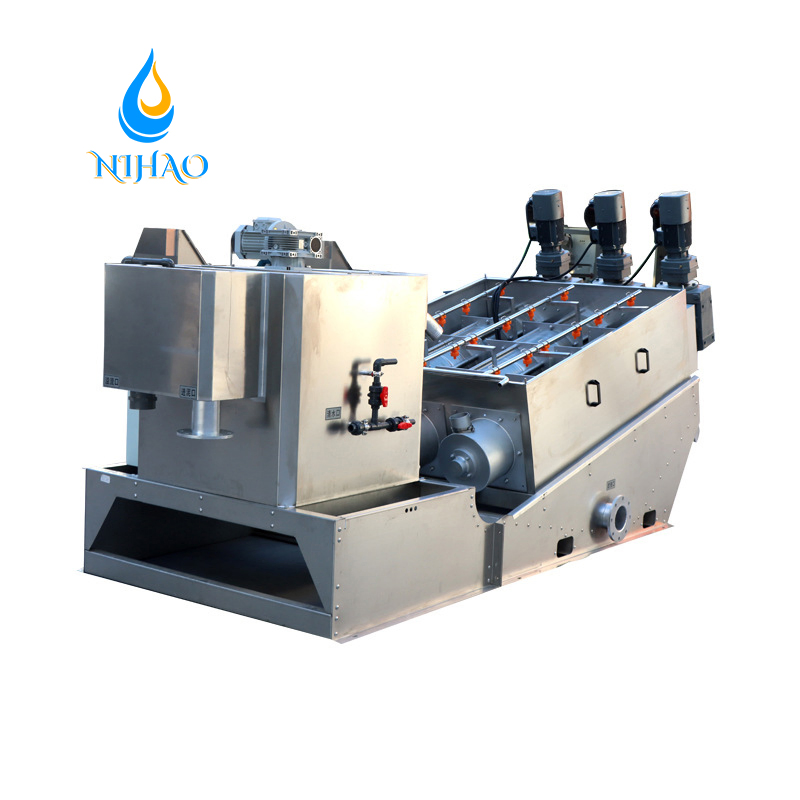
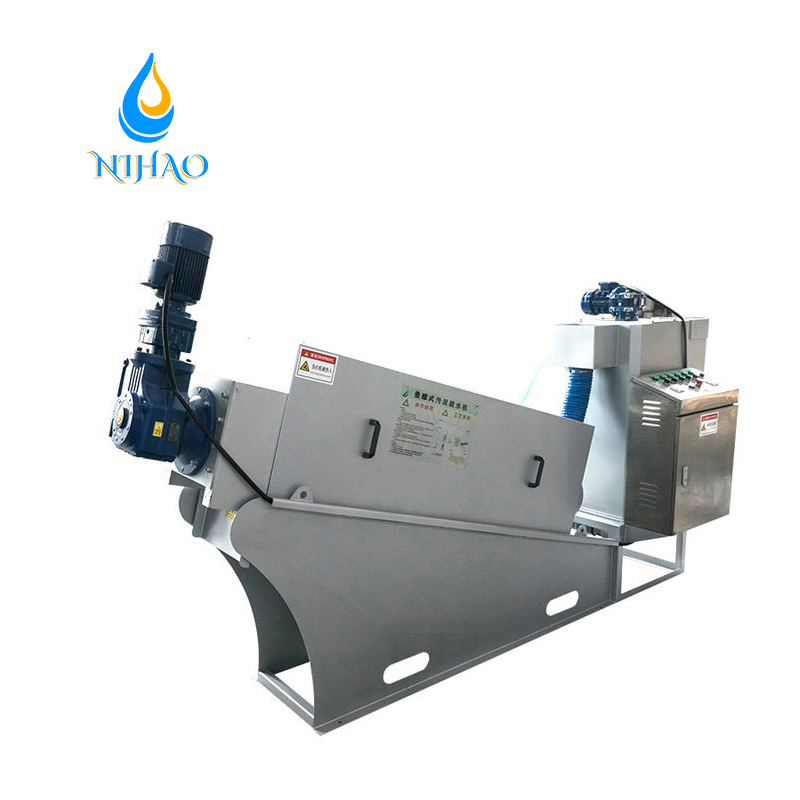
Low Infrastructure Investment Cost Dewatering Screw Presses Machine for Sewage Treatment

Still deciding? Get samples of $ !
Request Sample

Product Description

Basic Specifications

Model NO.
NH-131
Type
Sludge Dewatering Machine
Method
Physical Treatment
Usage
Industrial, Home, Agriculture
Material
SS304
Mixing Tank Mixer
Screw Slurry Type
Mechanical Size
L1900*W780*H1130(mm)
Processing Capacity
6-10(D5-Kg/H)
Electricity Consumption
0.74kw/H
Polymer Flocculant Rate
for Ds/T~0.3%
Flushing Water
24L/H
Net Weight
190kg

Dewatering Screw Press Overview

Dewatering Screw Presses Machine

Working Principles

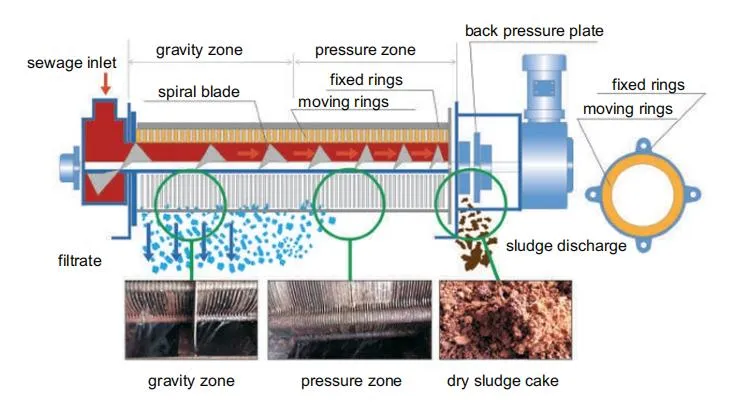
The conditioned sludge flows into the filter zones from the flocculation tank and is pushed forward to the discharging end. With the gaps between the thread of the shaft getting even narrower, the pressure on the sludge increases significantly. Water is then separated from the sludge, flowing out through the gaps between moving rings and fixed rings. The continuous movement of the rings cleans the gaps, preventing blockage. The filtered sludge cakes are finally discharged from the end.

System Description

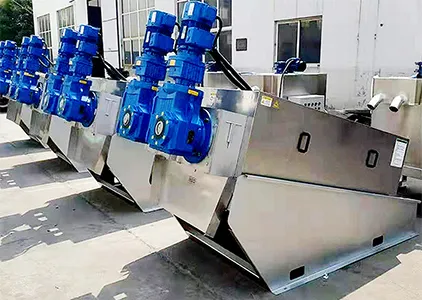
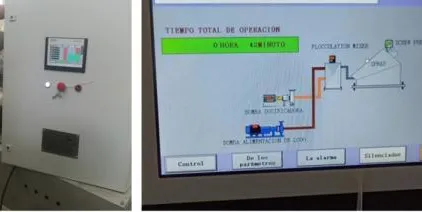
This Multi-Disc Sludge Dewatering Screw Press features a clog-free structure that can effectively reduce the need for sedimentation and thickening tanks, thereby saving construction costs. Controlled automatically by PLC, it represents a modern technology replacing traditional filter presses like belt and frame presses. Its low screw speed ensures minimal power and water consumption compared to centrifuges.
Screw Press Application
Sewage Treatment Process
Machine Detail

Key Applications

Widely used for various wastewater treatment systems including:
  • Municipal and petrochemical wastewater
  • Chemical fiber and paper making industries
  • Pharmaceutical and leather production
  • Dairy Farm Manure and Palm Oil Sludge treatment
  • Septic sludge and industrial water systems

Core Advantages

  • Enclosed design to minimize odors and noise
  • Very low wash water usage (approx. 1/8 of belt press)
  • Low power consumption (approx. 1/20 of centrifuge)
  • High cake solids and minimal operator requirement
  • Easy to operate with Auto Start-up, Run, and Shutdown
  • Optional touchscreen operation and monitoring systems
Technology Advantages
Low Noise Operation

Technology Advantages

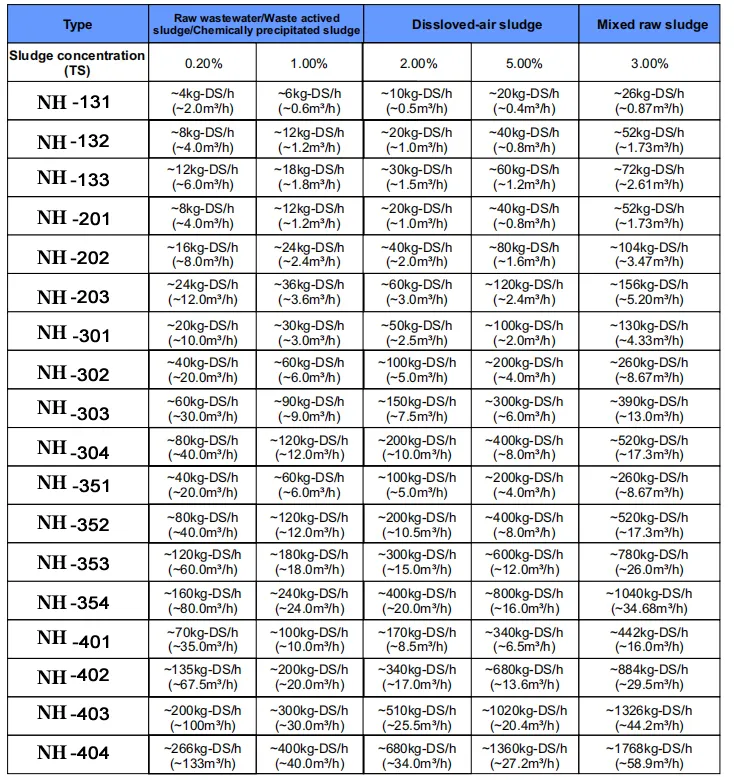
Sludge Concentration 2000mg/L - 50000mh/L: The configuration features an exclusive spiral plate for pre-concentration, making it ideal for treating low-concentration sludge. It replaces gravity-type dehydrators to realize efficient concentration, combining flocculation and concentration into one easy step.

Self-Cleaning Mechanism: Unlike traditional equipment, the dewatering screw press prevents clogging via moving rings that clean themselves during operation. This makes it particularly effective for oily sludge treatment without needing high-pressure cleaning water.
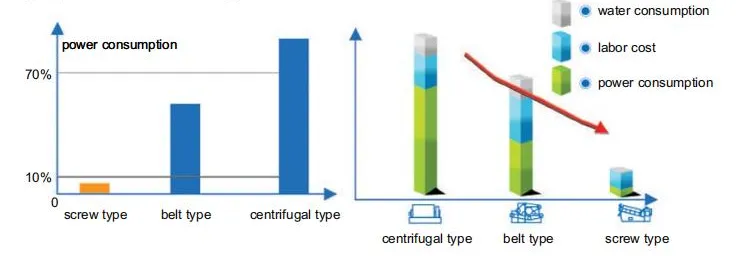
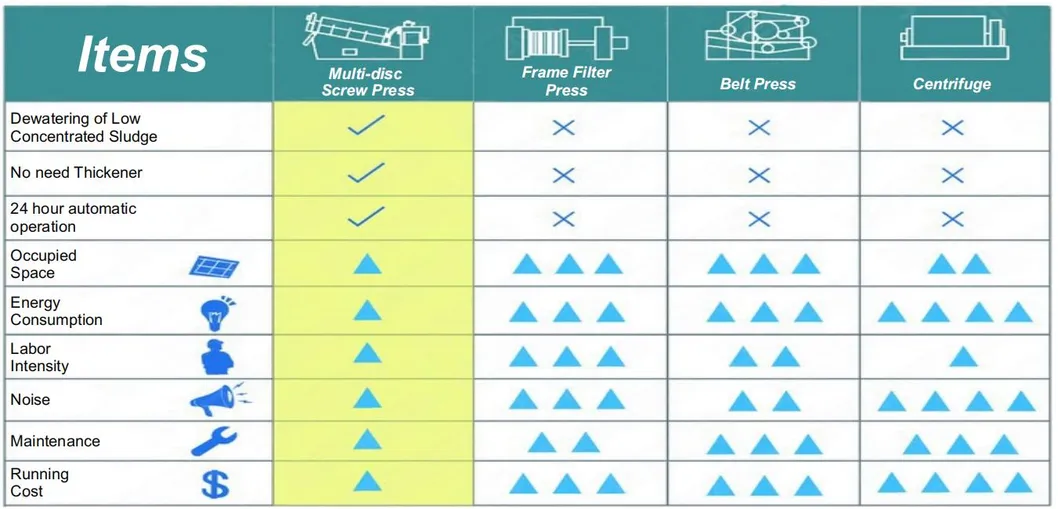
Comparison Chart
Infrastructure Benefits

Infrastructure & Operation

  • Directly treats sludge from aeration and sedimentation tanks, removing the need for thickening tanks.
  • Reduces construction costs and avoids phosphorus releasing problems.
  • Smaller footprint saves space and infrastructure investment.
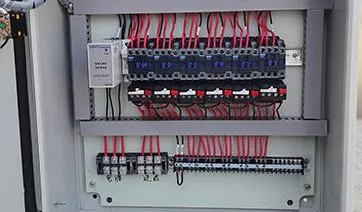
  • Safe and easy operation via the electric control cabinet.

Technical Parameters

Technical Specs
Type Discharge Height (mm) Dimension (mm) Weight (kg) Total Power (kW) Wash Water (L/h)
L W H Empty Operation
NH-131250186075010801803000.224
NH-132250196087010802504250.348
NH-201350251090013003204701.132
NH-20335026101285130065011002.296
NH-302495353012901760130021302.0580
NH-404759516031602100435096604.95320

Packaging & Delivery

Packaging Display
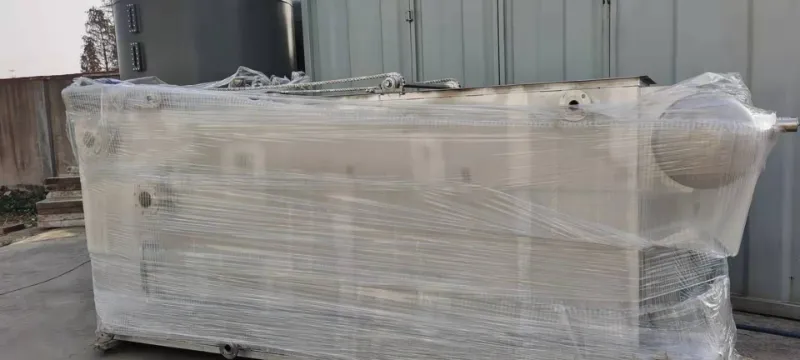
Standard Package 1
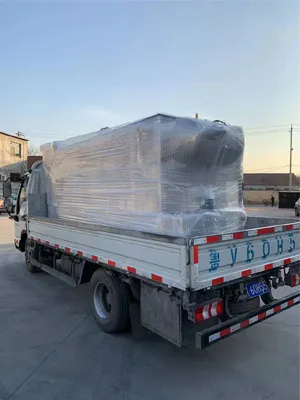
Standard Package 2

Frequently Asked Questions

1. What is the primary benefit of a Dewatering Screw Press over a Belt Press? The screw press consumes significantly less water (approx. 1/8) and power (approx. 1/20) while providing a clog-free, self-cleaning operation that is ideal for oily sludge.
2. Can this machine handle low-concentration sludge? Yes, the equipment is designed with a pre-concentration zone that can handle sludge concentrations ranging from 2000mg/L to 50000mg/L effectively.
3. Is the operation fully automated? Absolutely. The system is controlled by a PLC, allowing for automatic start-up, operation, and shutdown with minimal operator intervention.
4. Does the machine generate significant noise or odor? No, the enclosed construction and low-speed operation ensure minimal noise and effectively contain odors within the system.
5. What materials is the machine made of? The primary material used is high-quality SS304 stainless steel, ensuring durability and corrosion resistance for industrial applications.
6. How does the self-cleaning mechanism work? The screw shaft pushes moving rings which continuously clean the gaps between the fixed rings, preventing solids from clogging the filtration area.

Related Products