Model NO.
Truss Type Lifting Equipment
Certification
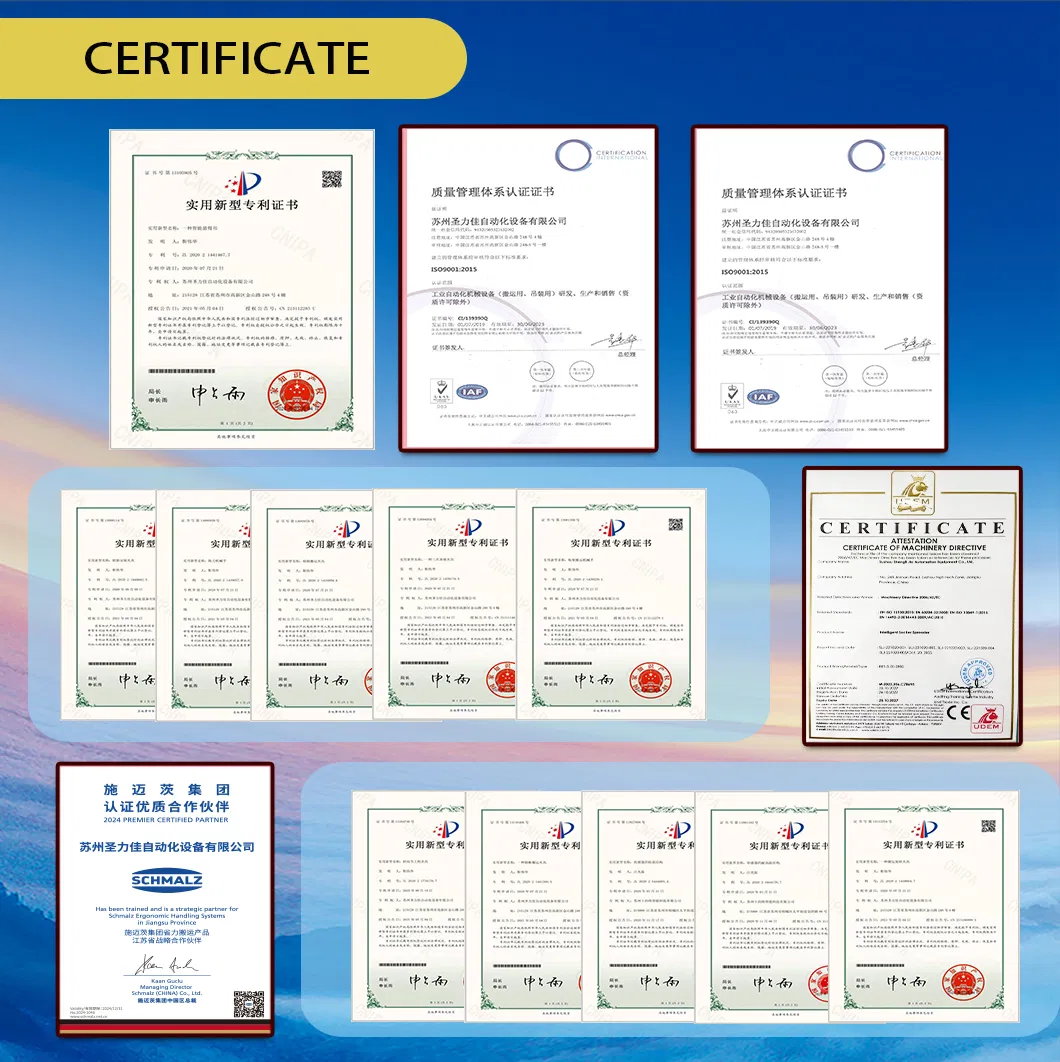
GS, RoHS, CE, ISO9001, ISO
Operation Form
Air Operation+Ground Operation
Maximum Lifting Height
<10m
Maximum Lifting Weight
<20t
Main Girder Form
Double Girder
Capacity
200kg, Customized
Up and Down Stroke
0-1700mm, Customized
Coverage Area
40000*2800mm, Customized
Material
Carbon Steel Column+Aluminium Alloy Track
Control Mode
Continuous Path Control
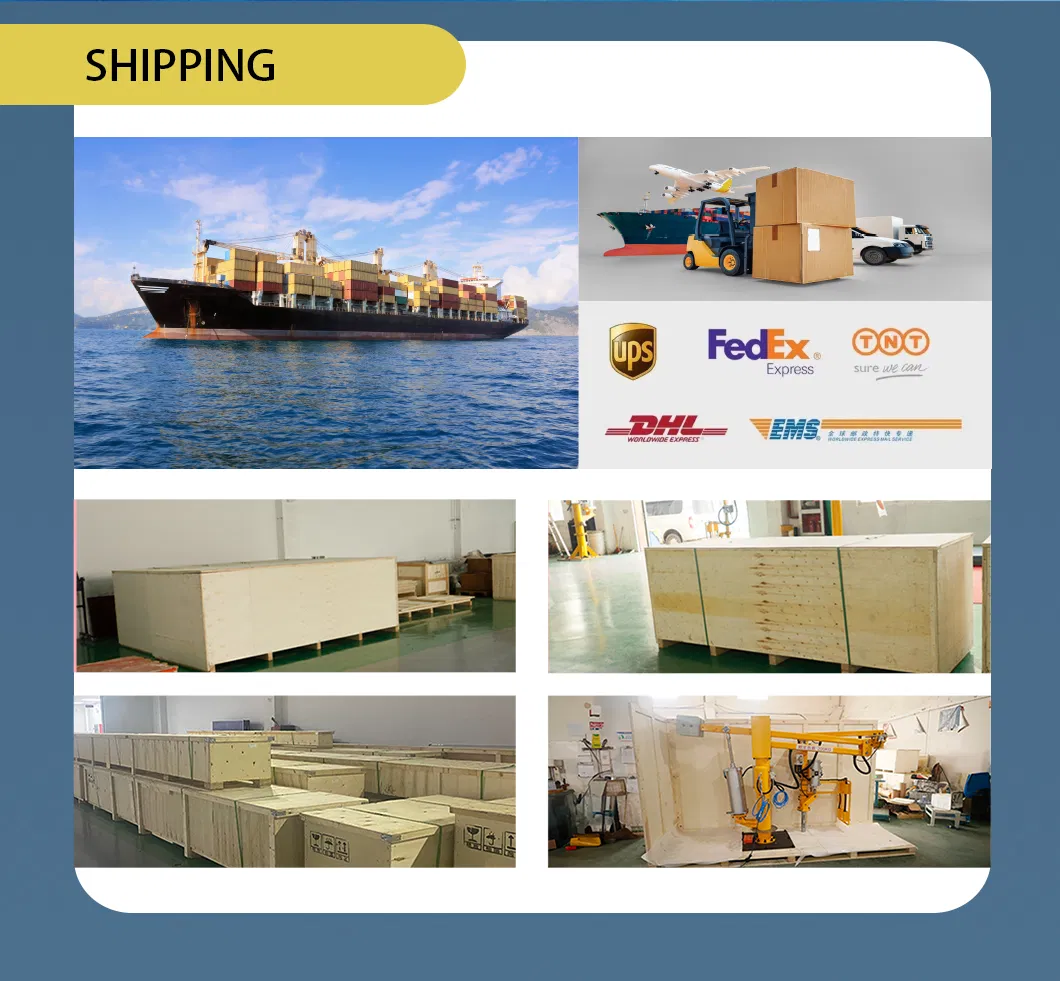
Package Size
300.00cm * 450.00cm * 200.00cm
Production Capacity
100PCS/Month
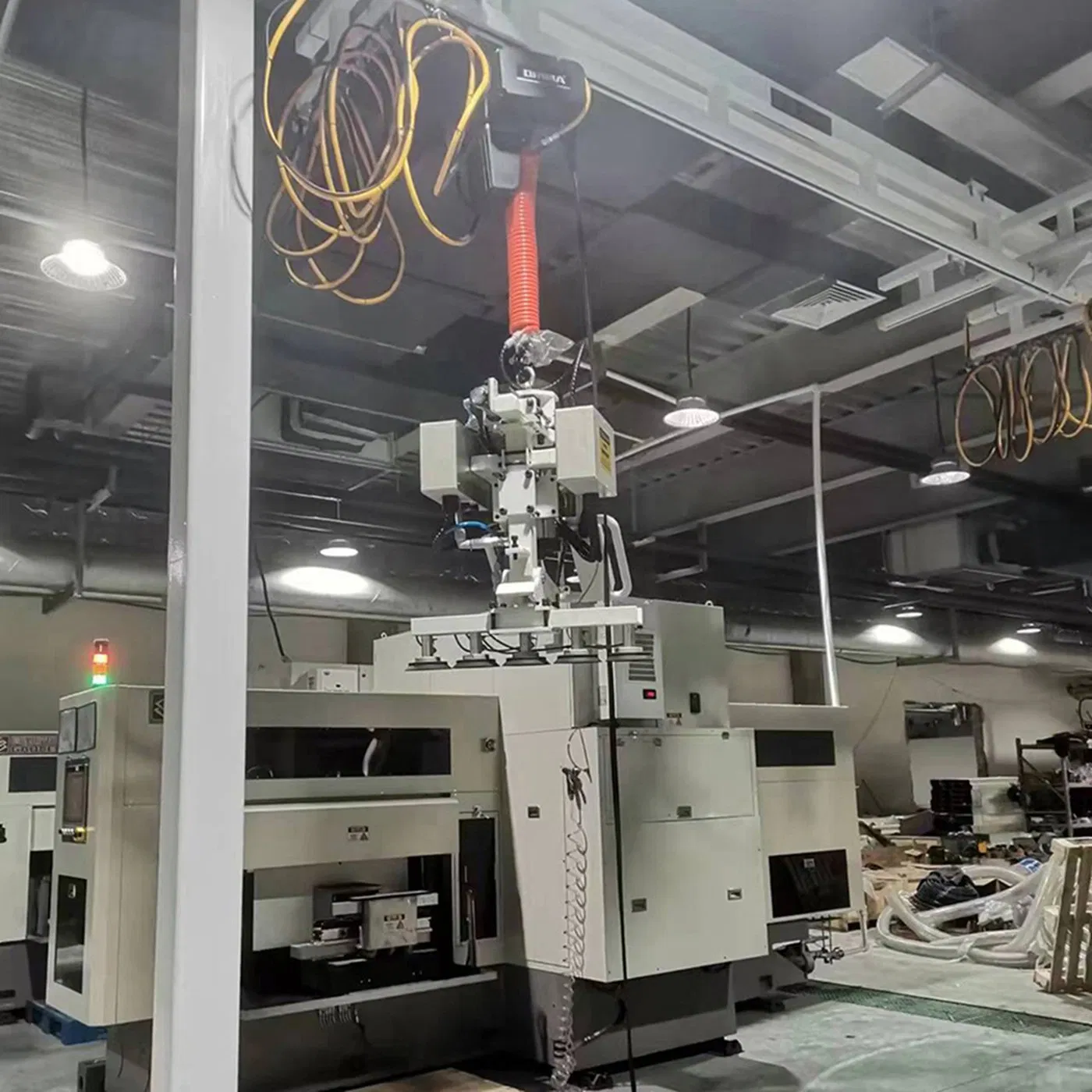
Overhead Hoist is a kind of manipulator equipment with chain. It realizes the lifting function by connecting the auxiliary lifting equipment installed on the mechanical arm with the fixture by soft cable.
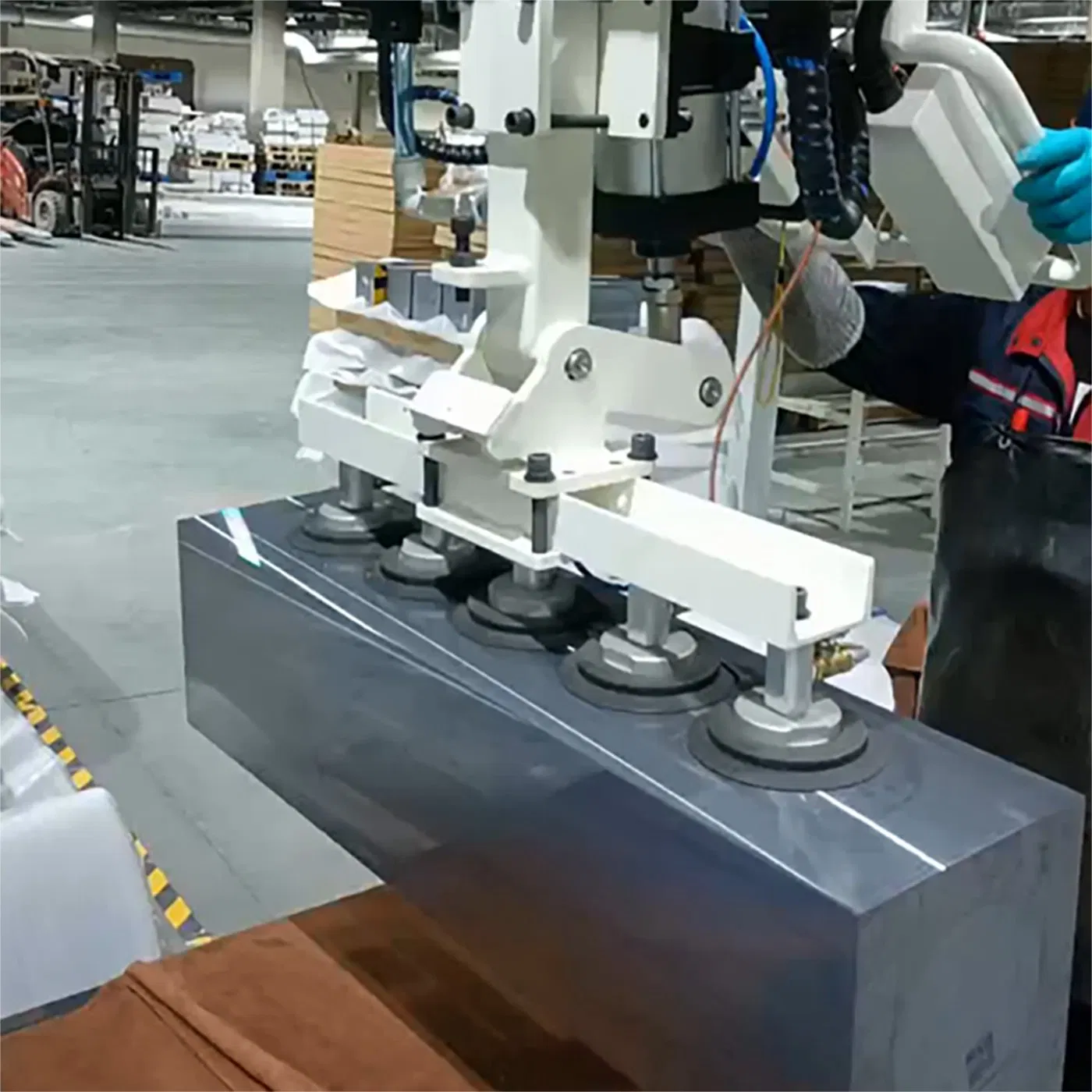
The equipment is used with various non-standard fixtures to realize workpiece handling, palletizing, loading and unloading. It reduces operator fatigue, maximizes productivity, and ensures worker safety. It has a wide range of applications, especially for modern production lines.
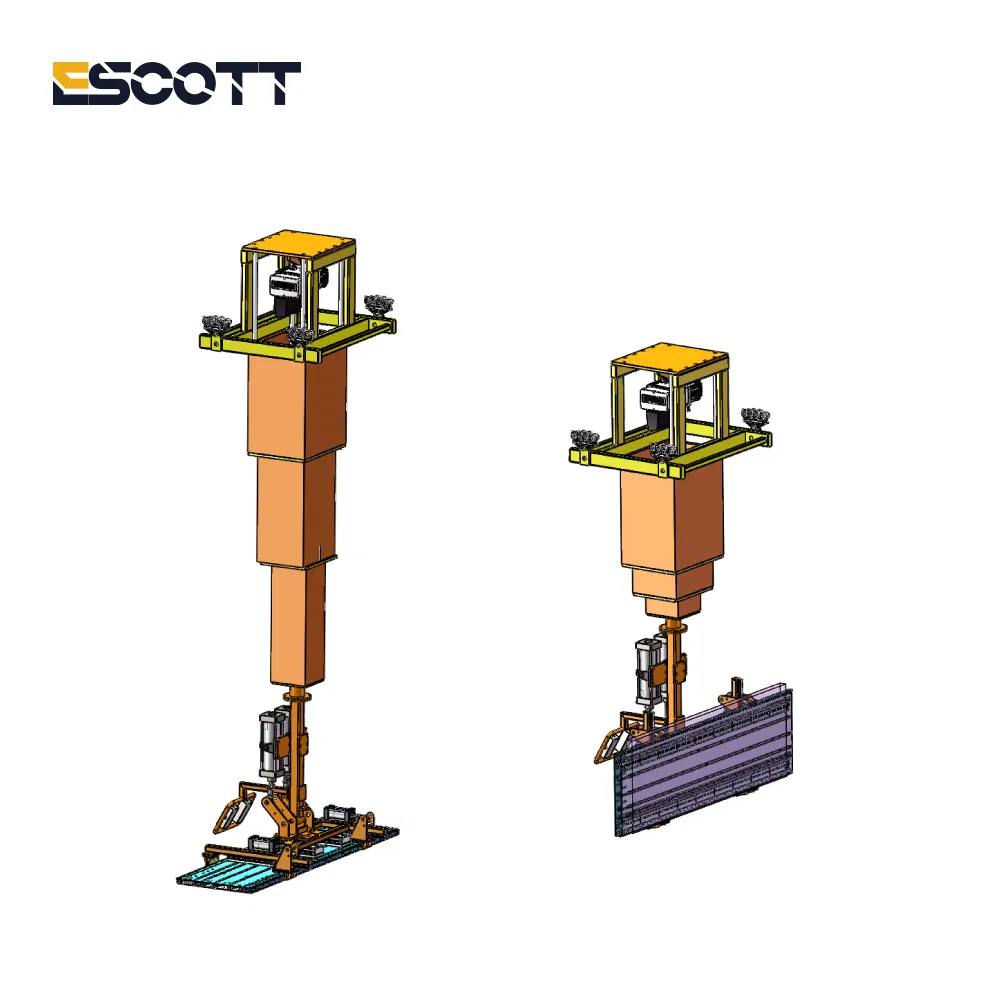
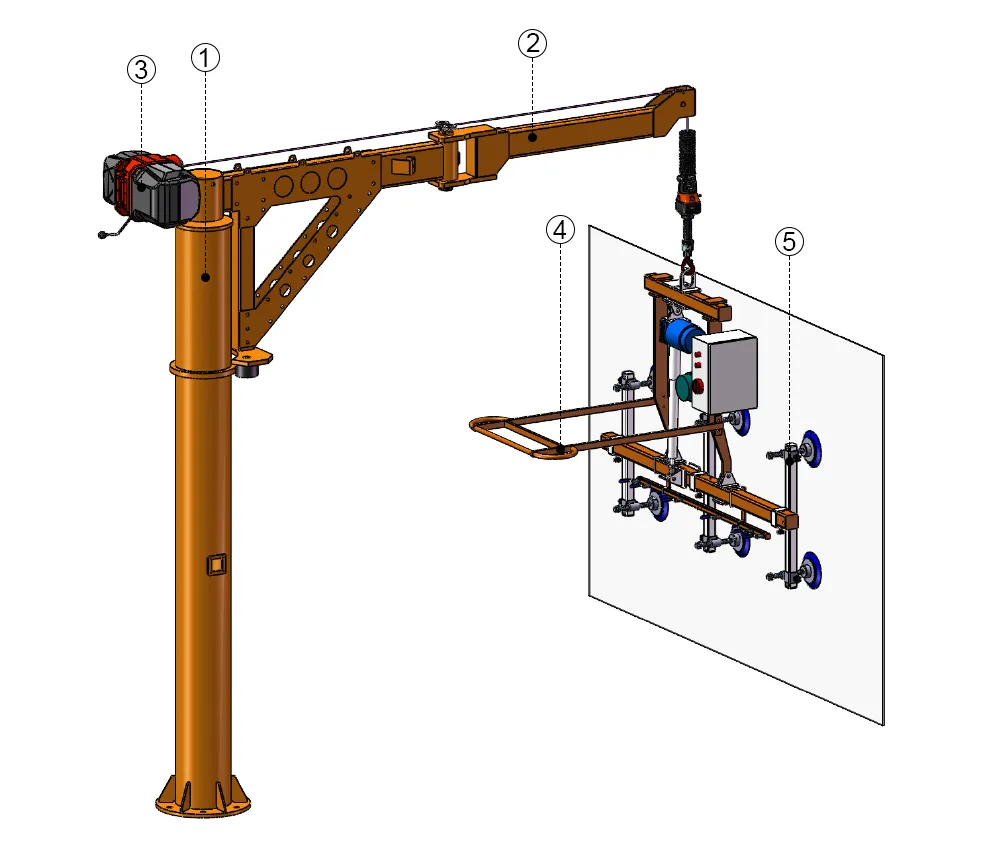
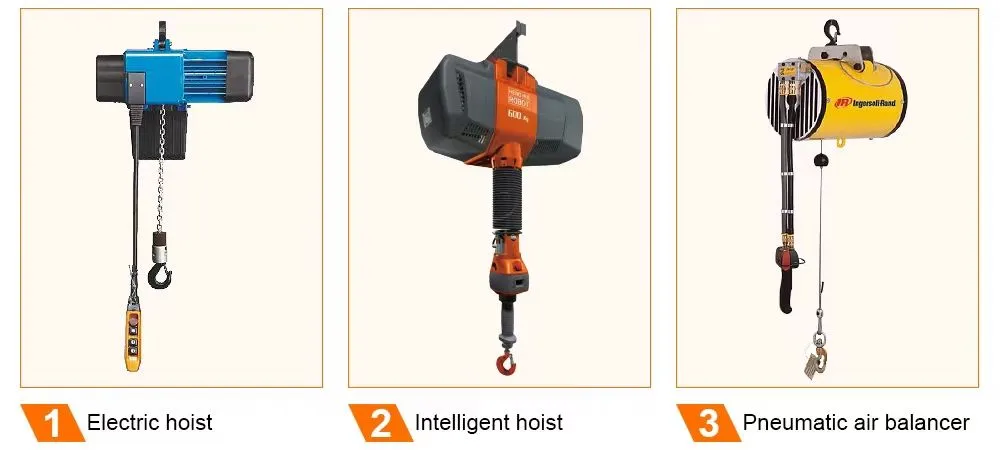
Jib Crane consists of three parts: column and cantilever arm, auxiliary lifting hoist and non-standard fixture. Auxiliary lifting hoist includes Electric hoist, intelligent hoist and pneumatic air balancer:
1. Electric Hoist: Usually installed on the cantilever, gantry crane, or truss. It features low cost, simple operation, and low maintenance. It is available in wire rope or chain versions with single or two-speed lifting options.
2. Intelligent Hoist: Composed of servo drive, motor, and reducer. Controlled by a microprocessor, it senses operator intent to provide precise, variable speed movement for efficient and safe handling.
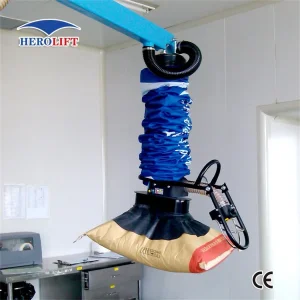
3. Pneumatic Air Balancer: Uses compressed air thrust to balance load gravity. The control system allows accurate suspension and movement of heavier objects, improving workplace safety and efficiency.
- 1. Column
- 2. Cantilever Arm
- 3. Auxiliary Lifting Hoist
- 4. Handle
- 5. Tooling Structure
1. Electric Hoist Specifications
| NAME |
BMS125 |
BMS250 |
BMS500 |
BMS1000 |
BMS2000 |
| Maximum load (Kg) | 125 | 250 | 500 | 1000 | 2000 |
| Lifting speed (m/min) | 8/2 | 8/2 | 8/2 | 4/1 | 4/1 |
| Motor power (Kw) | 0.4/0.1 | 0.4/0.1 | 0.4/0.1 | 0.75/0.2 | 1.5/0.37 |
| Lifting Medium | Chain |
| Power supply | 220-460V |
2. Intelligent Hoist Specifications
| NAME |
IAD-H80 |
IAD-H200 |
IAD-H300 |
IAD-H600 |
| Maximum load (Kg) | 80 | 200 | 300 | 600 |
| Handle-Lifting speed (m/min) | 40 | 30 | 15 | 7.5 |
| Float-Lifting speed (m/min) | 36 | 27 | 13.5 | 6.75 |
| Maximum stroke (m) | 3.5 | 3.5 | 3.5 | 1.7 |
| Lifting Medium | Wire rope or chain |
| Power supply | 220V±10% 50HZ |
3. Pneumatic Air Balancer Specifications
| NAME |
BW005060 |
BW015080 |
BW020120 |
BW032080 |
BW050080 |
| Maximum load (Kg) | 22 | 68 | 90 | 147 | 227 |
| Maximum stroke (m) | 1.5 | 2.0 | 3.0 | 2.0 | 2.0 |
| Lifting medium | Wire rope |
| Power supply | Air pressure |
* Note: Custom features available upon request.
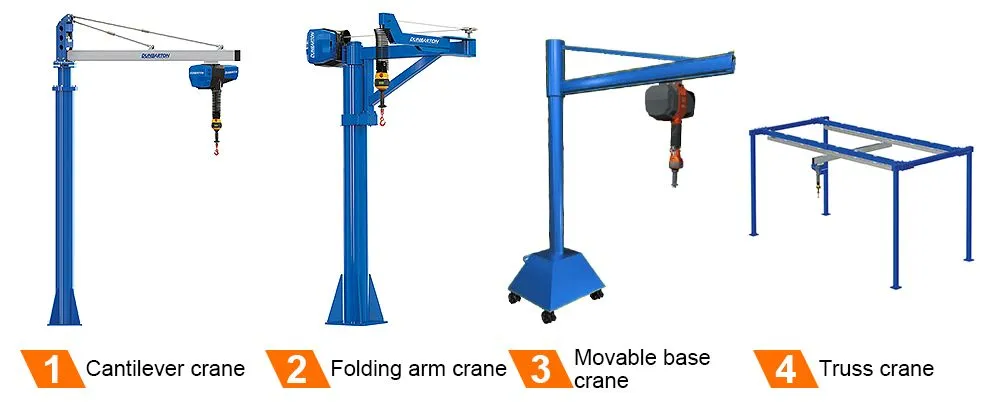
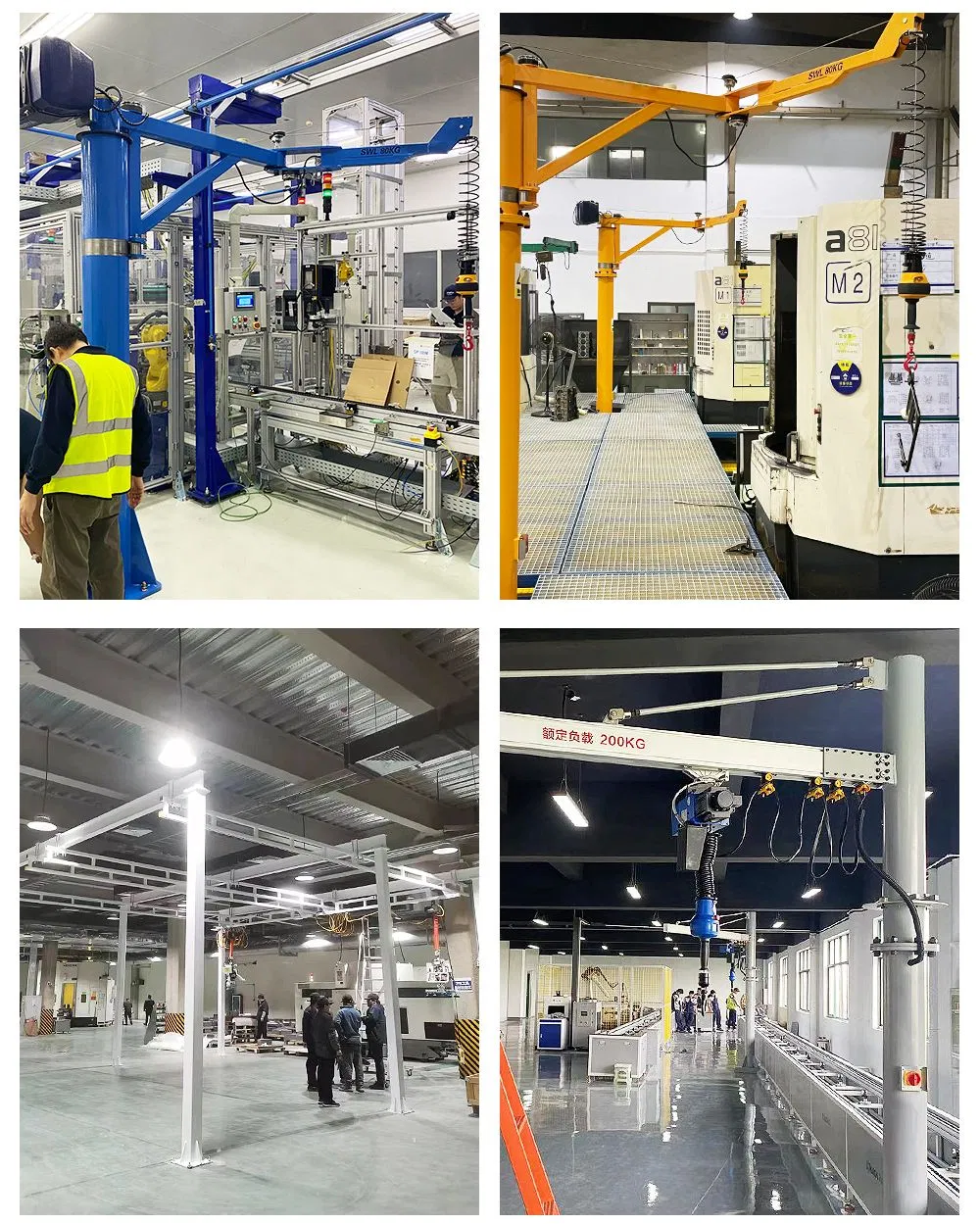
1. Cantilever Crane: Uses steel pipe columns and I-beam main beams. Simple structure, flexible operation, and large working space.
2. Folding Arm Crane: Accurate positioning, covers multiple working units with a small footprint.
3. Movable Base Cantilever Crane: Multi-directional movement, flexible positioning, and large operating range.
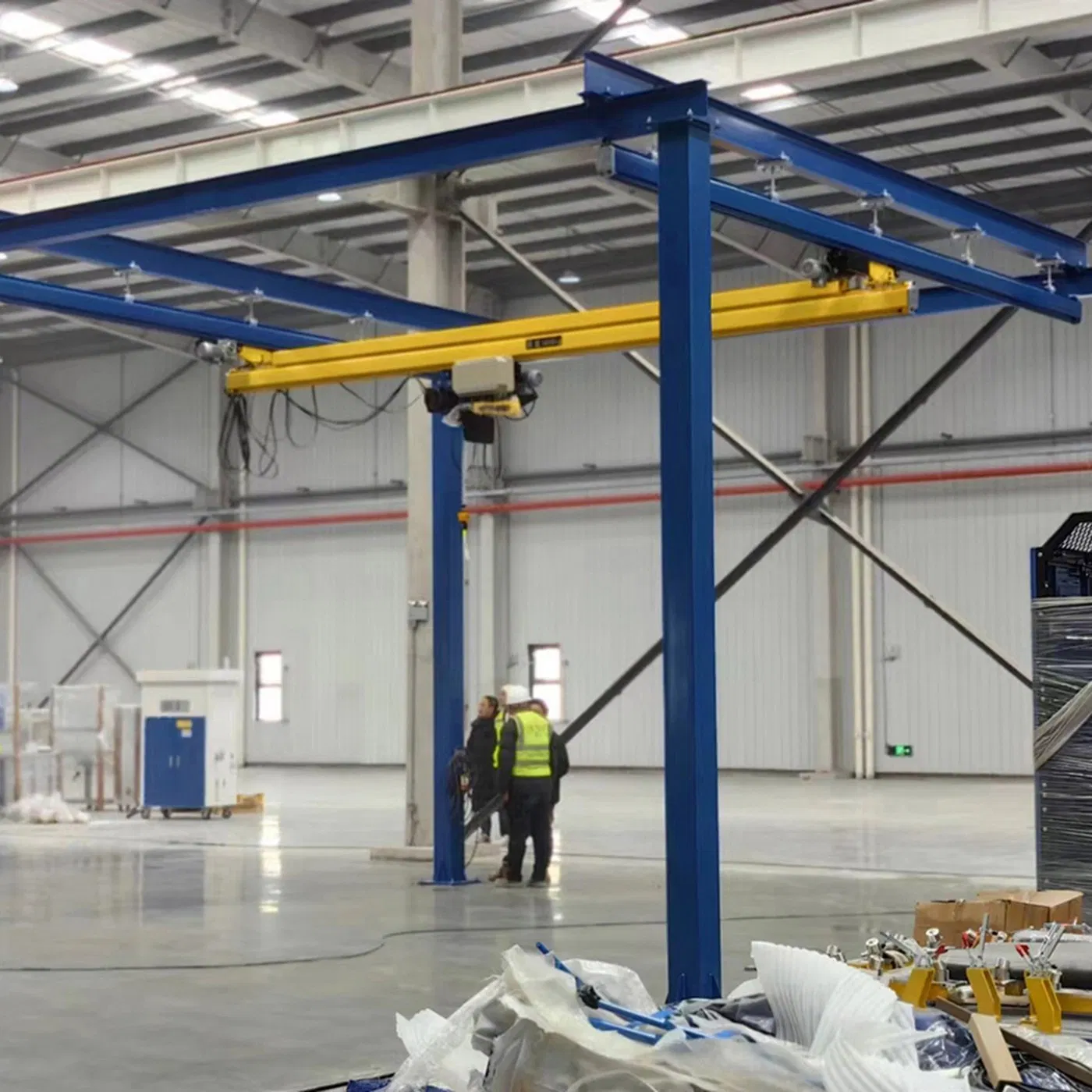
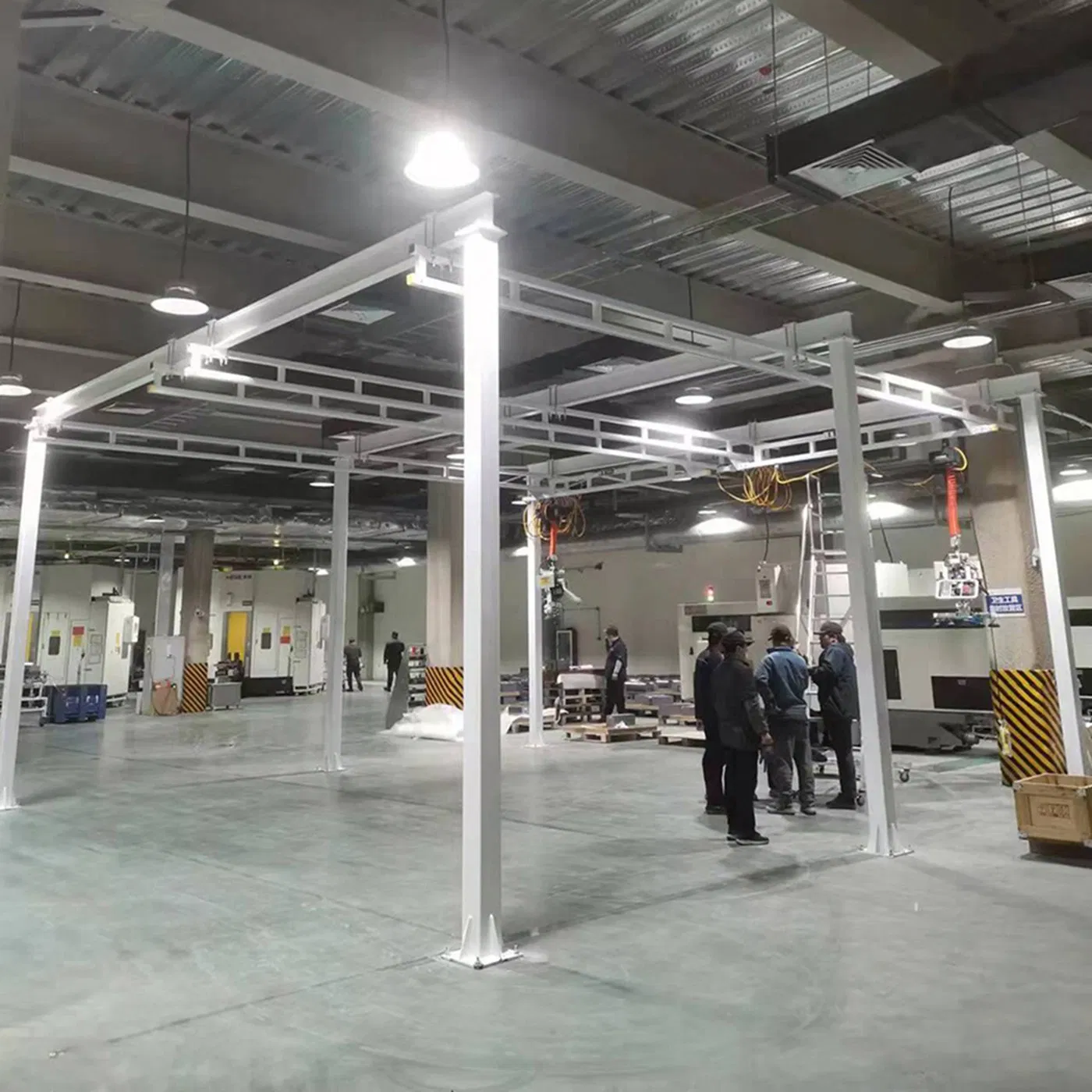
4. Truss Crane: Light weight and low bearing capacity. Ideal for limited space, height, or long travel requirements.
7
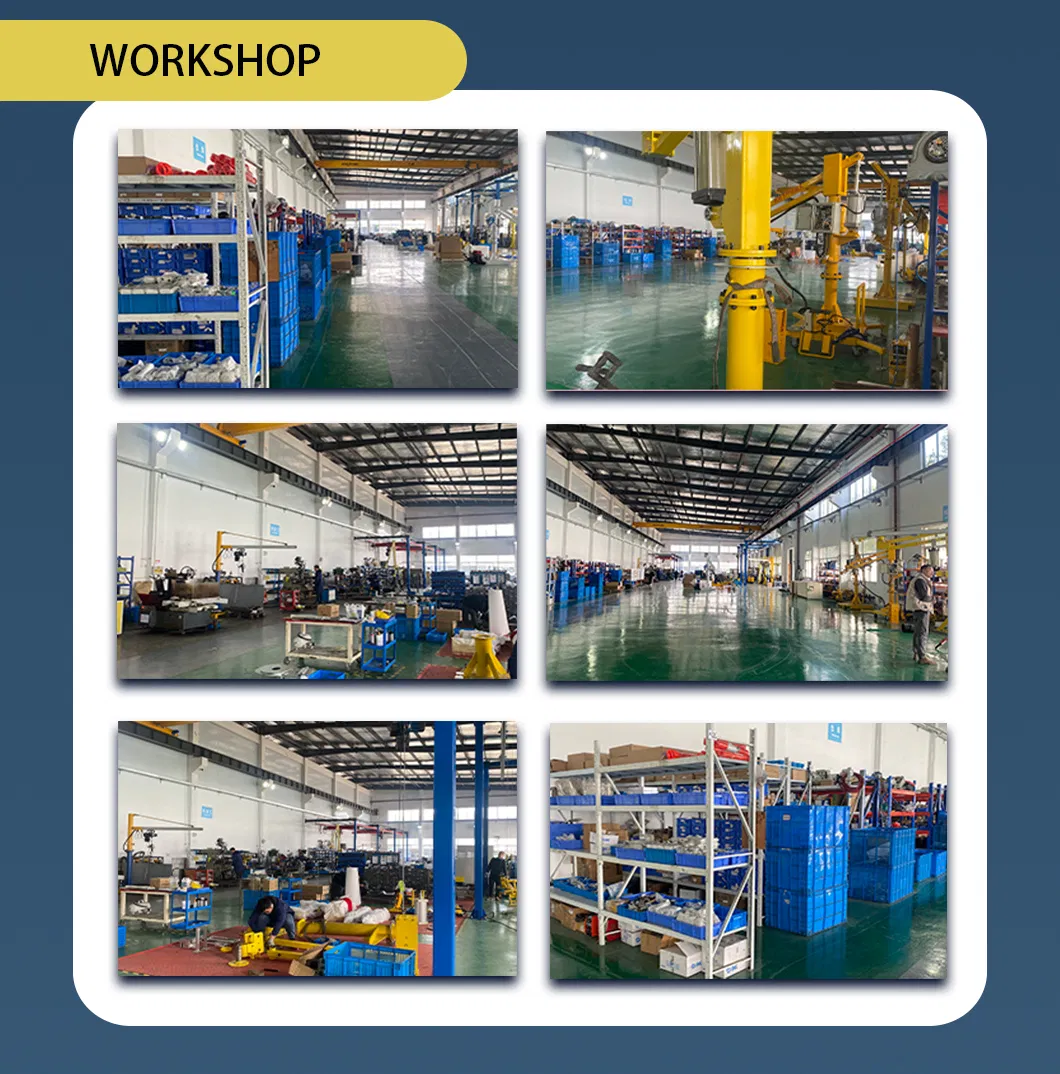
Working Scenarios & Factory
Frequently Asked Questions
Q1: What are the primary applications for this lifting equipment?
A: It is widely used for workpiece handling, palletizing, and loading/unloading in modern production lines, warehouses, and factories.
Q2: How does an intelligent hoist differ from a standard electric hoist?
A: Intelligent hoists use servo motors and microprocessors to provide variable speed control and high precision, sensing the operator's input for more fluid handling compared to standard single or two-speed electric hoists.
Q3: Is the lifting capacity customizable?
A: Yes, while standard models range from 80kg to 2000kg, specific capacities and features can be customized to meet your operational requirements.
Q4: What are the advantages of using a pneumatic air balancer?
A: It uses compressed air to balance the gravity of the load, allowing for weightless suspension and very precise manual manipulation of heavy objects.
Q5: What installation type is best for limited height?
A: A Truss Crane is typically the best solution for scenarios with limited height or space, as the structure is lightweight and adaptable.
Q6: What certifications does this equipment hold?
A: The equipment is certified with GS, RoHS, CE, and ISO9001, ensuring compliance with international safety and quality standards.
 Prizor Excavator