Explore our elite range of used industrial manufacturing, compaction, and construction machinery sourced from global leading sites.
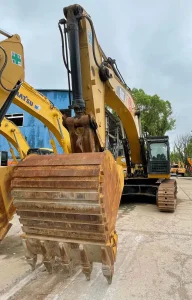
Established in 2008, Qingdao Prizor Excavator Co., Ltd. has achieved rapid and steady growth over the past 16 years, positioning itself as a premier global leader and trusted exporter of high-quality used construction machinery in China. With extensive industry experience, a robust engineering pedigree, and a strong global network, the company specializes in providing reliable, field-tested, and cost-effective equipment solutions designed to meet the rigorous demands of modern infrastructure development.
Our core product specialization covers a wide range of heavy earthmoving and compaction machinery, including used excavators, used wheel loaders, used bulldozers, used motor graders, used backhoes, used road rollers, used cranes, and used forklifts. We maintain strategic alliances with top-tier international brands, ensuring immediate access to premium equipment from CAT, Komatsu, Hitachi, Doosan, Hyundai, Kobelco, SANY, XCMG, Liugong, SDLG, JCB, New Holland, and CASE.
Guided by the principles of integrity, quality-first development, mutual cooperation, and win-win business practices, Prizor strives to build lasting partnerships. Every unit within our inventory is subjected to strict diagnostics, load-testing, and complete system-reconditioning to ensure optimal performance, structural safety, and high operating efficiency on any job site.
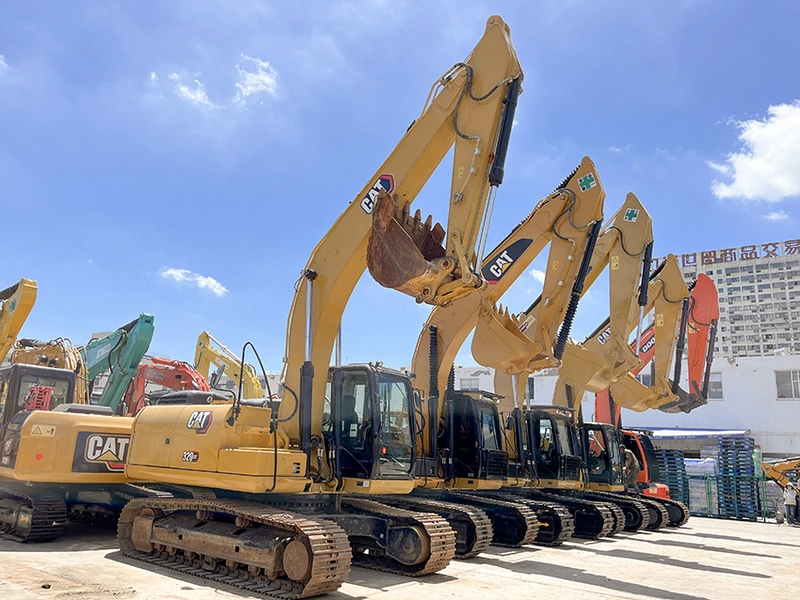
In the heavy construction and civil engineering sectors, capital allocation is highly optimized. Global procurement managers face a critical choice: direct capital expenditure toward new equipment with long OEM lead times, or leverage the secondary market to acquire highly reliable, immediately available used compaction machinery. Compaction equipment, specifically, exhibits long-term mechanical resilience, making high-quality used units an exceptionally lucrative investment path for lowering overall Total Cost of Ownership (TCO).
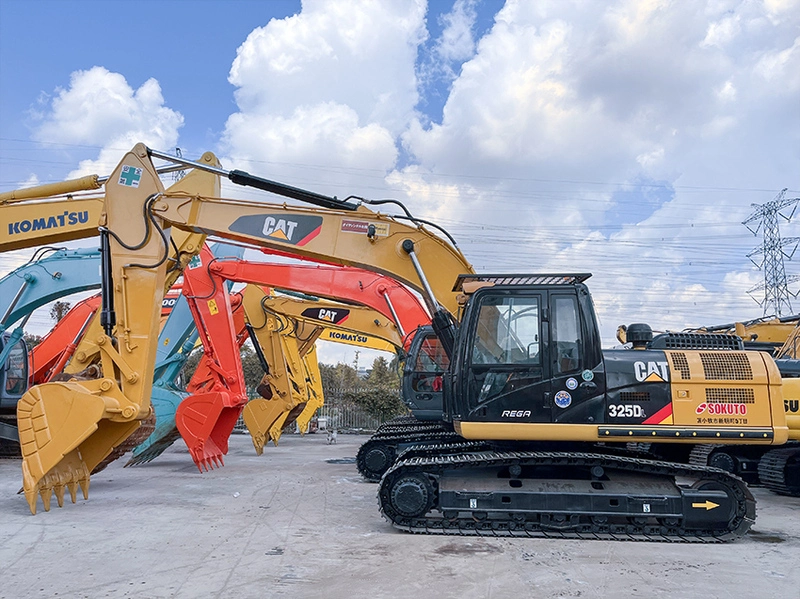
China has transformed from a domestic consumer of construction machinery to the central hub for premium-quality secondary equipment. The massive influx of new-generation machines into China's domestic infrastructure over the past decade has resulted in a vast, highly standardized surplus of low-hour, meticulously maintained machines.
Key drivers behind international procurement alignment include:
The reliability of a used machine is determined by the quality of its inspection, rebuilding, and testing processes. At Qingdao Prizor, our facility operates on the principle of Remanufacturing 4.0. This process ensures that "used" does not mean "worn out," converting raw secondary machinery into fully optimized, job-ready assets.
We deploy ultrasonic metal thickness analysis and magnetic particle inspections on key stress points of rollers, drum supports, and main frames to guarantee zero structural fatigue or micro-cracks before rebuilding starts.
Pumps and motors undergo precision testing on hydraulic benches. Seals, hoses, and valves are updated to premium specifications to eliminate pressure drops and safeguard consistent centrifugal force outputs.
Every roller and compactor is subjected to dynamic rolling tests on compacted soils and hard beds. Vibration frequencies (Hz) and amplitudes (mm) are monitored in real time using telemetry sensors to ensure factory specification alignment.
The compaction sector is transitioning from traditional static mass compaction to intelligent, high-precision engineering. For procurement divisions, choosing a used unit requires understanding the technological lifecycle of the machinery. Older models rely entirely on driver experience, while modern, low-hour used units feature early integrations of digital control systems.
Intelligent Compaction (IC) utilizes GPS, accelerometer-based drum measurements, and integrated temperature sensors. Accelerometers track the rebound of the drum to gauge material stiffness (Compaction Meter Value - CMV) in real time. This ensures operators don't over-compact, preventing aggregate fracture, while highlighting under-compacted zones. When sourcing used rollers from CAT or Komatsu, choosing models equipped with basic IC sensors ensures compatibility with modern project-site telemetry systems.
Traditional vibratory rollers lift and drop the drum, generating vertical impacts. While highly effective for deep sub-bases, vertical impacts risk damaging nearby utility conduits or structural foundations. Oscillation technology, on the other hand, keeps the drum in constant contact with the material, applying shear forces horizontally. This is crucial for bridge decks, urban roadways, and thin-lift asphalt overlays.
The secondary market is seeing a steady rise in Tier 4 Final and Stage V compliant engines, utilizing selective catalytic reduction (SCR) and diesel particulate filters (DPF). Additionally, the development of hybrid and fully electric compact rollers is growing for municipal inner-city contracts. Sourcing a hybrid or newer Tier 4 unit ensures long-term operational viability in emission-restricted urban zones.
Modern engineering requires specialized equipment solutions. One machine size does not fit all soil profiles. Sourcing the wrong compactor can lead to premature structural failures, unstable subgrades, and costly project delays. Below is a matrix showing how different machines solve real-world infrastructure problems:
Challenge: Consistent density across deep lifts of granular soils and base courses.
Solution: Single-Drum Vibratory Rollers (15–20 tons) from CAT or SANY. These heavy drums offer the high amplitude required to penetrate deep layers, establishing a solid foundation for asphalt pavements.
Challenge: Compacting highly cohesive clay soils with variable moisture content.
Solution: Padfoot (Sheepsfoot) Rollers. The tapered pads penetrate the clay surface, kneading the material to expel air pockets and distribute moisture evenly, critical for watertight earthworks.
Challenge: Narrow streets, sensitive structural foundations, and high-frequency utility lines.
Solution: Double-Drum Tandem Rollers (3–8 tons) with oscillation technology. They deliver high-density asphalt compaction without sending shockwaves into adjacent structures.
Moving large machinery across international borders requires navigating complex customs and environmental regulations. At Qingdao Prizor, we take compliance seriously. A used machine that cannot pass local environmental or safety audits is a liability. Our export division manages the following steps to ensure smooth delivery:
We analyze target region mandates (such as US EPA Tier 4, EU Stage V, or general Tier 2/3 regulations) and verify engine compliance certificates. We configure selective catalytic reduction (SCR) or exhaust after-treatment systems to match destination requirements.
We generate all necessary export documentation, including clean bills of lading, certified certificates of origin, commercial invoices, and packing lists. We also manage structural safety declarations to help avoid customs delays.
Our heavy machinery shipping specialists offer flexible transport options. We coordinate Roll-on/Roll-off (RoRo) for mobile units, Flat Rack configurations for oversize equipment, and protective container disassembly for small-to-medium compactors.
Expert insights on importing, inspecting, and maintaining used heavy construction machinery.
When inspecting a vibratory road roller, focus on the drum assembly and the vibration exciters. Check the drum surface for deep gouges or flat spots that can compromise compaction consistency. Inspect the rubber isolation mounts (buffers) for dry rotting, splitting, or misalignment, as worn mounts transfer vibration to the machine frame and damage components. Next, check the hydraulic lines feeding the exciter motor for leaks or pressure drops, and test both high and low vibration frequencies under load to ensure they align with the OEM specs.
Every engine undergoes diagnostic scans using specialized OEM software (such as Caterpillar Electronic Technician or Cummins INSITE) to read historical error logs, operating hours, and active codes. For markets with strict emissions standards (EPA/CE), we verify the engine label and the emissions after-treatment systems (DPF, SCR). We also conduct fluid analysis (S•O•S oil testing) to check for internal wear metals, soot levels, and coolant dilution, providing a clear picture of engine health.
The choice depends on the soil profile of your project. Smooth drum rollers are designed for granular soils, such as sand, gravel, and crushed rock, as well as asphalt surfaces. They use vibratory and static force to consolidate particles. Padfoot rollers are designed for cohesive soils like heavy clay and silty clay. The protruding pads penetrate the soil to compact from the bottom up, knead the material, and break down clay bonds to improve stability.
We offer three main shipping methods: Roll-on/Roll-off (RoRo) for drivable machines, Flat Rack containers for oversized units, and standard dry containers (often requiring partial disassembly to save on freight costs). Shipping costs are calculated based on overall machine dimensions (LxWxH), gross weight, shipping route, and market freight rates. Our team provides detailed, itemized shipping quotes for all major global destinations.
We maintain an inventory of fast-moving replacement parts and wear components (such as filters, seals, hydraulic hoses, and drum buffers) at our main yard. Because we export major global brands (CAT, Komatsu, SANY), parts are also widely available through local dealership networks in your home country. For specialized parts, we offer express international shipping directly from our facility to minimize downtime on your job site.
Explore our heavy-duty excavators, material handling equipment, and specialized mineral processing systems.
 Prizor Excavator