Small-budget projects leave little room for equipment that sits idle or performs poorly. A compact excavator may save hours on trenching, while a plate compactor can help create a firmer base for paving. Yet the right choice depends on the site, material, schedule, and operator skill. A low purchase price can be misleading. Maintenance, transport, fuel, and storage also affect the real cost.
This guide explores China’s top 10 equipment options for small budget projects, from concrete mixers and generators to compact loaders and cutting tools. It also explains how to choose equipment for small budget projects by comparing essential tasks, rated capacity, service access, and rental availability. Keep the details practical. Measure the gate before ordering; check whether a machine fits beside a stack of blocks. Small details matter.
Equipment-selection specialist Michael Turner puts the core idea this way: “Choose for the work in front of you, not the machine’s impressive specifications.” That is a useful test, though no single rule fits every site. A cheaper tool may prove costly if parts are difficult to source. And a larger machine may be wasted on a short job. The rankings offer a starting point, not a substitute for checking local service support, safety instructions, and project conditions. Some trade-offs remain. A careful comparison can still prevent avoidable spending.
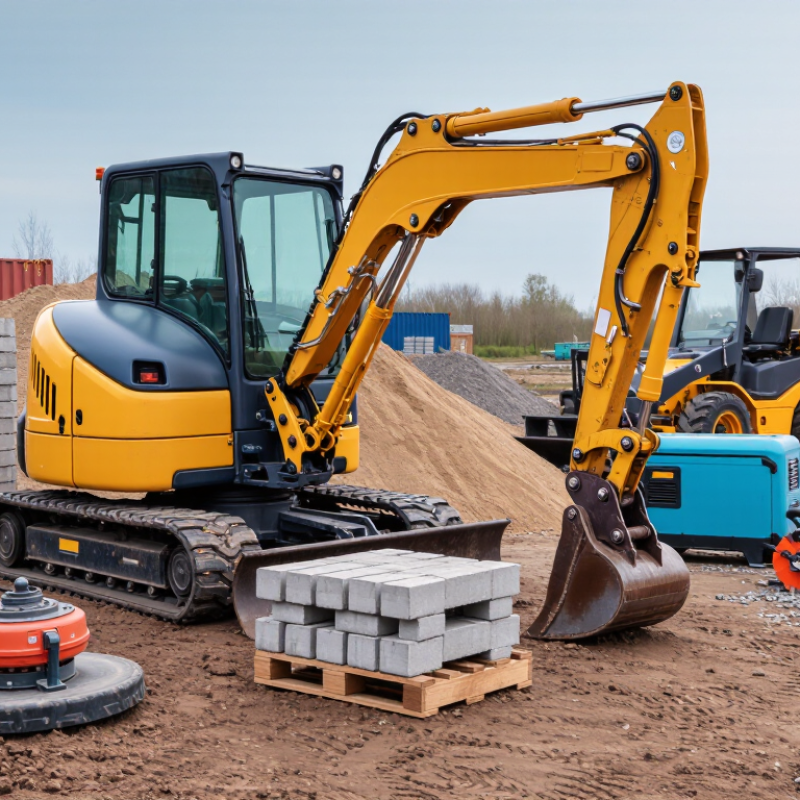
A small-budget project needs equipment that fits the actual work, not an impressive list. Break the job into tasks: drilling, lifting, cutting, or moving materials. Estimate how often each task will happen and how much material it involves. Write it down. A compact mixer may suit a few small pours, while repeated larger batches could make its limited capacity costly in time.
Check the site before choosing equipment. Measure doorways, work areas, and storage space; note whether power is available and how far materials must travel. A machine that performs well in a catalog can be awkward on a narrow path or difficult to transport. That matters. Also consider who will operate it, what training is needed, and whether routine maintenance can be handled locally.
Compare the full cost of owning equipment with renting it, including delivery, consumables, repairs, and downtime. For tools used only once, rental may preserve cash. Frequent use may justify buying, but only if the tool suits the workload and can be stored safely. Estimates are rarely perfect; I would leave room for an unexpected repair or a slower workday. A simple task-and-cost sheet can expose gaps before money is committed.
China Top 10 Equipment for Small Budget Projects
Key Criteria for Choosing Affordable Equipment from China
A low purchase price can hide expensive gaps. Compare the full landed cost: unit price, freight, import charges, installation, and likely spare parts. For a small workshop, a machine that needs a custom tool or a long service trip may cost more than expected. Check whether its capacity matches your real workload, not an optimistic future estimate. Fit matters.
Ask for a dated specification sheet, clear photos, and a video showing the equipment running under load. Confirm dimensions, power requirements, included accessories, and the exact items covered by the warranty. Ask how quickly common wear parts can be shipped, and whether instructions are available in a language your operators understand. Get answers in writing. A sample or independent inspection may add cost, but it can reveal loose fittings, rough finishes, or unclear controls before shipment.
Supplier communication is also part of the decision. Notice whether replies address your actual questions or simply repeat sales claims. Request references for comparable projects where practical. Payment milestones should connect to verifiable steps, such as production completion and inspection. This takes time. Still, the cheapest option is not always the sensible one; I would reassess that assumption whenever service access or replacement parts remain vague.
A practical comparison of commonly available equipment categories for small construction, renovation, and infrastructure projects.
| # | Equipment Category | Typical Small-Project Specification | Indicative Price Range (USD) | Suitable Applications | Key Criteria for Choosing |
|---|---|---|---|---|---|
| 1 | Portable Concrete Mixer | Approximately 120–350 L drum capacity; electric or small gasoline engine | $300–$1,200 | Small foundations, repair work, garden paths, and low-volume concrete mixing | Check usable batch capacity, motor power, drum thickness, mixing consistency, and availability of replacement belts and blades. |
| 2 | Plate Compactor | Approximately 60–100 kg operating weight; gasoline engine; roughly 10–20 kN compaction force | $250–$800 | Compacting soil, sand, and gravel in pathways, trenches, and small paving areas | Compare compaction force, base-plate dimensions, vibration frequency, handle design, and whether a water tank is included for paving work. |
| 3 | Rebar Cutting Machine | Portable or bench-mounted model for reinforcing bar commonly up to about 25–32 mm, depending on material grade | $500–$1,800 | Cutting reinforcing steel for small slabs, footings, and building repairs | Confirm cutting capacity by bar grade, cutting cycle, blade life, electrical requirements, guarding, and local availability of replacement blades. |
| 4 | Rebar Bending Machine | Compact electric model for reinforcing bar commonly up to about 25–32 mm, depending on material grade | $450–$1,600 | Bending reinforcement bars for columns, beams, and small concrete structures | Check maximum bar size, bending angle settings, repeatability, foot-pedal or control arrangement, and included bending pins. |
| 5 | Mini Excavator | Approximately 0.8–2.0 tonnes operating weight; compact tracks and a small digging bucket | $5,000–$15,000 | Landscaping, shallow trenching, small foundations, and work in restricted-access areas | Compare operating weight, digging depth, machine width, engine emissions compliance, hydraulic flow, parts support, and shipping dimensions. |
| 6 | Walk-Behind Road Roller | Approximately 0.5–1.5 tonnes; single-drum or double-drum configuration | $1,800–$5,000 | Compacting small roads, driveways, paths, and asphalt or granular surfaces | Assess drum width, vibration force, water-spray system, gradeability, transport weight, and suitability for the intended soil or pavement material. |
| 7 | Diesel Generator | Approximately 5–10 kW rated output; single-phase or three-phase options | $700–$2,500 | Temporary site power for tools, lighting, and small equipment | Verify continuous rather than peak output, voltage and frequency, fuel consumption, noise level, starting system, and applicable emissions requirements. |
| 8 | Air Compressor | Approximately 7.5–15 kW motor; tank-mounted or industrial configuration, depending on required airflow | $700–$3,000 | Operating pneumatic tools, spray equipment, and workshop machinery | Choose by delivered airflow and working pressure—not motor power alone—and check duty cycle, tank size, moisture control, and electrical compatibility. |
| 9 | Construction Water Pump | Common portable models with 2–4 inch inlet and outlet sizes; gasoline, diesel, or electric drive | $100–$800 | Site drainage, transferring water, and filling or emptying small tanks | Match pump type to clean or dirty water, required flow and lift, solids-handling capacity, hose connections, and availability of seals and impellers. |
| 10 | Small Concrete Block-Making Machine | Manual or semi-automatic configuration; output depends on block size, cycle time, and operating hours | $1,500–$10,000 | Small-scale production of concrete masonry units for local projects | Ask for verified output using the intended block dimensions and mix, and compare mold cost, curing needs, power requirements, installation, and operator training. |
Price note: Price ranges are broad, indicative estimates for basic equipment configurations available from suppliers in China. They are not live quotations and may exclude freight, duties, taxes, installation, tooling, spare parts, and certification. Actual prices vary by specification, order quantity, exchange rates, and delivery terms. Request a written quotation and confirm applicable safety and emissions requirements before ordering.
Small-budget projects benefit from equipment that handles repeated tasks without tying up cash. The American Rental Association’s 2024 Rental Market Monitor forecast U.S. equipment and event rental revenue of about $78.7 billion. That scale makes renting a practical option to compare with buying, though it does not guarantee savings on every job.
Ten useful options are a portable concrete mixer, plate compactor, mini excavator, compact track loader, inverter generator, air compressor, submersible pump, rotary hammer, laser level, and portable welding machine. Match each tool to the work: a plate compactor suits narrow paths, while a pump can clear a shallow, flooded trench. For occasional use, rent the excavator or loader; buy smaller tools only when frequent use justifies storage and upkeep. Rent when uncertain.
Efficiency also matters. The 2023 Global Status Report for Buildings and Construction, published by UNEP and GlobalABC, attributed 37% of global energy-related CO2 emissions to buildings and construction in 2022. Choosing efficient electric tools where site power allows may reduce fuel use, but results depend on duty cycles and electricity supply. Inspect before work. A low purchase price can still mean costly delays; compare delivery, maintenance, operator skill, and downtime before committing.
Small projects rarely need a full workshop. A compact drill handles fastening and pilot holes, while a circular saw cuts sheet goods and framing lumber. An orbital sander smooths edges; a wet-dry vacuum manages dust and spills. For outdoor or heavier work, consider a small air compressor, portable generator, pressure washer, concrete mixer, plate compactor, or welding machine. Match each tool to the actual task, not an imagined future project. That distinction can save money.
Space needs affect both setup and storage. Measure doorways, work surfaces, and the area needed to move safely around equipment. A mixer or compactor may need open ground, while a saw needs stable support and room for long stock. Check power access, ventilation, and noise conditions before buying. Costs include more than the purchase price: blades, discs, fuel, maintenance, protective gear, and delivery can add up. Rental may be cheaper for a tool used once, though availability and transport can complicate the plan. I have found that estimating storage space too optimistically is an easy mistake.
Tips: Compare total project cost, not just tool price. Leave clear walking space, and check the manual for operating and maintenance requirements. Some needs are easy to overlook.
Indicative entry-level purchase costs in China, shown in USD. Actual prices depend on capacity, specifications, taxes, and whether equipment is new or used.
Space figures are approximate working or storage areas. Allow extra room for safe operation, material handling, and access.
| Equipment | Common use | Approx. space | Indicative cost range (USD) |
|---|---|---|---|
| Portable concrete mixer | Small-batch mortar and concrete mixing | 2–4 m² | $500–$2,000 |
| Plate compactor | Compacting soil, gravel, and paving bases | 2–3 m² | $300–$1,200 |
| Rebar cutter | Cutting reinforcing bar to length | 2–4 m² | $500–$2,000 |
| Inverter welding machine | Light steel fabrication and repairs | 1–2 m² | $100–$600 |
| Portable generator | Temporary power where grid supply is unavailable | 2–3 m² | $300–$1,500 |
| Water pump | Site drainage and water transfer | 1–2 m² | $100–$700 |
| Concrete vibrator | Removing air pockets from freshly placed concrete | About 1 m² | $50–$300 |
| Tile cutter saw | Cutting tiles for floors and walls | 2–3 m² | $100–$800 |
| Mini excavator | Trenching, shallow excavation, and landscaping | 15–25 m² | $8,000–$25,000 |
| Compact wheel loader | Moving soil, aggregates, and materials | 20–35 m² | $8,000–$20,000 |
The chart uses the midpoint of each indicative price range. Compare total ownership costs too, including transport, power or fuel, maintenance, and operator requirements.
For small-budget projects, a low price can hide costly differences. Compare suppliers using the same written specification, not just a product name. List capacity, power use, dimensions, included tools, and delivery terms. Ask for a dated quotation and clear photos of the exact machine. Stock images are not enough. Request a short operating video that shows the control panel, moving parts, and a sample output. Small details matter.
Check quality against measurable points. For a mixer, inspect the welds, lid fit, and noise during operation. For a cutting machine, review the blade guard, alignment, and finish on a test piece. Ask how the equipment was tested, what parts wear out, and how replacements are supplied. A warranty sounds useful, but read what it excludes. For used machines, request maintenance records and close-up photos of wear. I would not treat a polished video as proof; it can leave out awkward faults. If the purchase is significant, arrange an independent inspection before payment. Compare the full delivered cost, too. A cheaper unit may need extra wiring, installation, or spare parts, and those costs are easy to miss.
List the tasks, such as drilling, cutting, lifting, or moving materials. Estimate how often each task will happen.
Check doorways, work areas, and storage space. A large mixer may not fit through a narrow entrance.
A compact drill handles fastening, while a circular saw cuts lumber and sheet goods. Match each tool to real tasks.
Compare purchase costs with rental, delivery, repairs, and downtime. Renting may make sense for a tool used once.
Budget for blades, discs, fuel, protective gear, and maintenance. Small costs add up.
Allow space to set up and move safely. Long boards need extra room near a saw.
Confirm power access, ventilation, and noise conditions. Read the manual, too.
Use a task-and-cost sheet, then leave room for repairs or slower workdays. My estimates still miss things sometimes.
Choosing the right equipment for a small-budget project starts with defining the work, expected output, available space, and spending limit. A clear assessment helps prevent overspending on unnecessary capacity while ensuring essential tasks can be completed efficiently. This guide explains how to choose equipment for small budget projects by weighing purchase price against durability, energy use, maintenance needs, ease of operation, and availability of replacement parts.
It also introduces ten practical equipment options from China for common project requirements, with attention to their typical uses, space requirements, and cost factors. Since specifications and quality can vary, buyers should compare suppliers carefully, review technical details, request clear documentation, and confirm warranty and after-sales support. A balanced comparison of total ownership costs—not just the initial price—can help small projects make a reliable, space-conscious choice while staying within budget.

Prizor Excavator