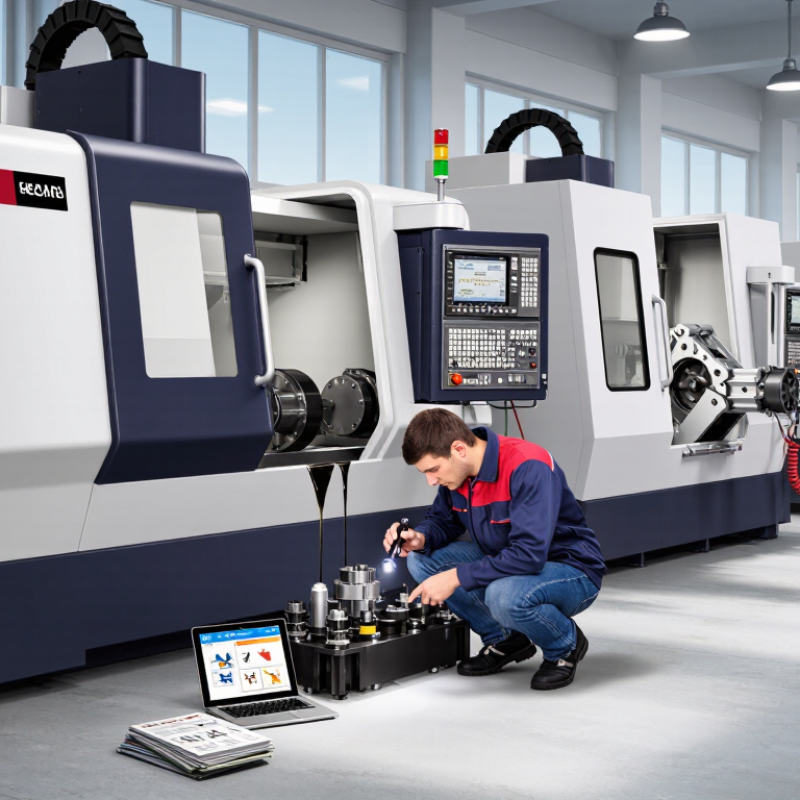
Buying used machinery in 2026 can reduce costs, but one rushed decision may create months of repairs. This guide explains how to avoid common mistakes when buying used machinery through practical checks and documented evidence. It focuses on condition, ownership records, operating history, safety features, and realistic total cost. A machine can look clean while hiding worn bearings, cracked welds, or unstable hydraulics. Ask for service invoices, serial numbers, inspection reports, and a live demonstration under normal load. Do not trust polished photographs alone. Details matter.
Experienced buyers often compare several machines before negotiating. They check oil leaks beneath the frame, unusual vibration near the motor, and warning lights during operation. An independent technician can measure pressure, alignment, temperature, and electrical performance more accurately than a quick visual review. Still, inspections are not perfect. A seller may lack complete records, and a buyer may overlook transport, installation, training, or spare-part costs. That is where careful questions become valuable. This article presents reliable methods for evaluating suppliers, verifying specifications, estimating risk, and writing clear purchase conditions. It also examines common judgment errors, including buying the cheapest option or accepting vague promises. Use the advice as a disciplined starting point, not a guarantee. Every machine has a history. Your job is to uncover it before payment.
A used machine’s purchase price is only the visible layer. Build a five-year total cost of ownership model before making an offer. Include the machine price, inspection, freight, installation, energy, planned repairs, and downtime. For example, a $100,000 machine may require $8,000 freight, $22,000 yearly energy, $12,000 annual repairs, and $15,000 annual downtime. Its five-year cost reaches $275,000. The calculation is simple, but the assumptions are not.
Tip: Measure energy before guessing. The U.S. Department of Energy reports that motor-driven systems can consume more than half of industrial electricity. Record actual operating hours, power demand, and local tariffs. Also price spare parts and technician travel. The Uptime Institute’s 2024 outage analysis found that 54% of reported outages cost at least $100,000. Your factory may face a smaller loss, but a six-hour stoppage can still erase a cheap purchase.
Tip: Demand maintenance records, repair invoices, and a live demonstration. Add a 10–15% uncertainty allowance for unknown wear. My early models were too optimistic because I trusted seller estimates and ignored setup delays. That mistake matters. Freight can arrive late. A missing control component can stop production for weeks. Recalculate the TCO under normal, pessimistic, and best-case conditions. If the used machine remains competitive under the pessimistic case, the decision is stronger.
2026 Top Tips: How to Avoid Mistakes Buying Used Machinery
A low hour meter can still hide expensive wear. I once trusted a clean display and ignored uneven pedal resistance. That was a mistake. Photograph the meter, serial plate, cold-start reading, and dashboard warnings before payment. Compare operating hours with tire wear, hydraulic play, seat condition, and service dates. EquipmentWatch’s 2024 Used Equipment Market Report identifies age, usage, and condition as key valuation factors. A mismatch deserves questions, not optimism.
Request the complete OEM service-interval records, including engine oil changes, filter replacements, fluid analysis, and major inspections. Check whether scheduled work occurred by hours or calendar time. A machine with 4,000 hours may be riskier than one with 6,000 hours if maintenance was irregular. Calculate the gap yourself. For example, 6,000 hours over ten years equals about 600 hours annually, which may indicate seasonal use or missing records. Do not assume either explanation.
Ask an independent technician to verify stored fault codes and inspect fluid leaks under operating temperature. Deloitte’s 2024 Manufacturing Industry Outlook reports that many manufacturers are prioritizing productivity and asset reliability, making maintenance history increasingly valuable. Records can still be incomplete. Leave room for doubt. If the seller cannot explain a two-year service gap, price the machine as an unknown-risk asset, not a bargain. Keep copies of every document. Future buyers will need them too.
| Priority | Verification Dimension | Records and Checks to Request | What a Reliable Result Looks Like | Warning Signs and Buyer Action |
|---|---|---|---|---|
| High | Machine age and production date |
|
The serial number, identification plate, documents, and physical machine configuration tell a consistent story. The production date is checked against the technical manual and parts information. | Missing or altered identification plate, mismatched serial numbers, or unexplained gaps in ownership history. Pause the purchase until the identity and age are independently verified. |
| High | Operating hours and hour-meter integrity |
|
The hour-meter reading increases logically across dated records and is consistent with wear on pedals, controls, seat, pins, hoses, and other frequently used components. | Very low hours combined with heavy wear, broken seals, damaged meter housing, or large unexplained gaps. Treat the hour reading as unverified and price the machine according to condition, not the displayed hours. |
| High | OEM service-interval records |
|
Maintenance follows the interval schedule specified in the machine’s current operating or maintenance manual. Records identify both the service date and operating-hour reading. | Records say only “serviced” without details, or multiple scheduled services are missing. Obtain a full inspection and budget for overdue maintenance before making an offer. |
| High | Engine and drivetrain condition |
|
The machine starts from cold without unusual delay, reaches normal operating temperature, operates smoothly, and shows no active warning indicators or unexplained fluid loss. | Seller preheats the machine before arrival, refuses a cold start, or clears fault codes without supporting repair records. Arrange an independent mechanical inspection. |
| High | Hydraulic, pneumatic, or electrical systems |
|
Functions operate at normal speed and temperature without abnormal drift, pressure loss, repeated alarms, exposed wiring, or visible leaks. | Slow or intermittent movement, hydraulic oil contamination, repeated fuse failure, improvised wiring, or a function that cannot be tested. Require a repair estimate before purchase. |
| Medium | Structural wear and safety-critical components |
|
Wear is consistent with the reported hours and application. No unapproved cracks, severe deformation, unsafe repairs, or missing protective equipment are present. | Fresh paint covering welds, cracks near high-load areas, uneven tire or track wear, or damaged safety structures. Stop the inspection and obtain a qualified engineer’s opinion. |
| Medium | Application history and workload |
|
The application history is documented and compatible with the machine’s design, duty rating, attachments, and maintenance records. | The seller cannot explain the previous application, or the machine shows severe-duty wear despite a claimed light-duty history. Use condition and verified maintenance as the basis for valuation. |
| Medium | Parts, attachments, and compatibility |
|
Included equipment matches the machine’s specifications and can be operated safely without exceeding rated capacity or requiring undocumented modifications. | Modified mounts, missing guards, incompatible hydraulic connections, or attachments with unknown weight. Do not operate until compatibility and safety are confirmed. |
| Medium | Inspection environment and test conditions |
|
The buyer receives enough time and access to inspect, start, operate, and document the machine under representative conditions. | Machine is presented hot, recently washed, covered in oil-absorbing material, or restricted from normal operation. Reschedule the inspection or use an independent inspector. |
| High | Total ownership cost and purchase protection |
|
The final cost is based on verified condition and documented defects, with responsibilities and acceptance criteria clearly recorded before payment. | Pressure to pay before inspection, vague verbal promises, or refusal to document defects. Do not rely on the advertised age or hours alone; delay payment until the agreement is complete. |
Buying used machinery demands more than checking hours, paint, and production speed. ISO 12100 provides a practical framework for identifying hazards before purchase. It examines crushing, entanglement, cutting, ejected parts, noise, and unexpected movement. It starts with hazards.
During an inspection, watch the machine cycle with guards fitted and controls clearly marked. Ask for manuals, electrical drawings, maintenance records, and details about previous modifications. Documents may be incomplete. That is common, and it should influence your risk decision. Apply ISO 12100’s risk reduction approach: remove hazards through design, add suitable safeguards, then provide clear instructions. Do not rely on warning labels alone.
OSHA 1910.147 requires an energy control procedure for servicing, cleaning, adjustment, and jam removal in covered workplaces. Identify every energy source, including electrical, pneumatic, hydraulic, thermal, stored mechanical, and gravitational energy. Authorized employees should shut down, isolate, lock, tag, release stored energy, and verify zero energy before work begins. Test the start control, then confirm the machine cannot move. Test before touch.
A used machine may need a site-specific lockout procedure after installation. Compare its actual wiring and piping with the seller’s documents. Train authorized and affected employees, and inspect the procedure periodically. One overlooked accumulator or suspended component can defeat careful planning. I have seen teams rush this step. That mistake is easy to make.
Apply ISO 12100 risk reduction principles before purchase and follow the OSHA 1910.147 Lockout/Tagout sequence before inspection, installation, maintenance, or operation.
The chart compares the number of core steps in each safety framework: ISO 12100 uses a three-step risk reduction method, while OSHA 1910.147 identifies a seven-step energy-control sequence for lockout/tagout. These are process steps, not accident-rate statistics.
Buying used diesel machinery requires more than checking hours and paint. Confirm whether the engine meets EPA Tier 4 or EU Stage V requirements for your operating location. These standards are not interchangeable.
Ask the seller for the original emissions certificate, engine serial number, maintenance records, and import documents. Compare the engine plate with the paperwork. Check for a diesel particulate filter, selective catalytic reduction system, and diesel exhaust fluid equipment where required. A missing sensor or altered exhaust system may create expensive compliance problems. It can also reduce machine performance.
Tips: Inspect the machine with a qualified technician. Start the engine cold and watch for warning lights, unusual smoke, or repeated regeneration cycles. Request a diagnostic report, not only a verbal promise. Confirm local registration rules before payment. A machine compliant in one country may fail requirements elsewhere.
Look closely at the exhaust aftertreatment system. Cracked housings, disconnected wiring, and inactive sensors deserve serious questions. Do not assume low operating hours mean low emissions risk. Neglected systems can deteriorate while the machine sits unused. I have seen buyers focus on hydraulic leaks and overlook emissions records entirely. That mistake is costly. When documentation is incomplete, pause the deal and obtain independent verification. Retrofits may be technically possible, but they are not always approved, affordable, or reliable.
2026 Top Tips How to Avoid Mistakes Buying Used Machinery
Require a Load Test Against OEM Tolerances Before Signing the Acceptance Report
A used machine can look excellent under no load. Paint, clean panels, and a quiet motor prove very little. Require a documented load test before signing the acceptance report. Use the original operating limits for that exact model and configuration. Generic figures are not enough.
Bring calibrated test equipment. Record load, pressure, speed, temperature, vibration, and cycle time. Check readings at startup and after the machine reaches working temperature. For lifting equipment, use a controlled load and verify smooth movement, brake holding, and emergency stopping. For production machinery, test several cycles with representative material. Watch for leaks, unusual noise, drifting pressure, and overheating.
Ask for the test method in writing. Include the equipment serial number, test weights, instrument calibration dates, and observed results. Have both parties sign each page, including any exceptions. Do not accept “within normal range” without numbers. OEM tolerances may vary by revision, attachments, or previous repairs.
I once trusted a short demonstration. The machine passed cold but slowed after forty minutes. That mistake was expensive. A longer test would have exposed it. Inspectors can also miss small details when deadlines feel urgent. Pause the purchase if the seller refuses a proper test. A signed report can become difficult to challenge after delivery. Capture clear photos of gauges, connections, and test conditions before approval.
Include purchase price, inspection, freight, installation, energy, repairs, spare parts, and downtime. Add technician travel costs. A $100,000 machine may cost far more after five years.
Measure operating hours, power demand, and local electricity tariffs. Do not rely on seller estimates alone. A meter reading is better than a hopeful guess.
Estimate lost production during repairs, setup delays, and missing components. A six-hour stoppage can erase a low purchase price. Use normal, pessimistic, and best-case scenarios.
Request maintenance records, repair invoices, service schedules, inspection reports, and fault-code reports. Keep copies of everything. Incomplete records create uncertainty.
Photograph the hour meter, serial plate, dashboard, and cold-start reading. Compare hours with tire wear, hydraulic movement, seat condition, and service dates. A clean display proves little.
Irregular maintenance may create more risk than higher usage. Check calendar-based service intervals, not only hour-based intervals. A two-year service gap needs explanation.
Ask the technician to check stored fault codes, fluid leaks, controls, and operating-temperature performance. Start the machine cold. Watch for warning lights, smoke, and repeated regeneration cycles.
Match the engine plate, emissions certificate, maintenance records, and import documents. Confirm requirements for your operating location before payment. Standards differ between countries.
Look for cracked housings, disconnected wiring, inactive sensors, and missing exhaust-treatment components. Low hours do not guarantee low emissions risk. Sitting unused can still cause deterioration.
Add roughly 10–15% for unknown wear, delays, and incomplete records. My early estimates were too optimistic. Recheck the assumptions before making an offer.
Buying used machinery requires more than comparing purchase prices. To understand how to avoid common mistakes when buying used machinery, build a five-year total cost of ownership model that includes the machine price, freight, energy consumption, expected repairs, and potential downtime. Verify the machine’s age, operating hours, maintenance history, and original equipment manufacturer service-interval records. These details can reveal hidden wear and help determine whether the equipment is genuinely cost-effective.
Safety and compliance should be confirmed before any payment or acceptance. Apply ISO 12100 risk-reduction principles and follow OSHA 1910.147 lockout/tagout requirements when inspecting, operating, or servicing the machine. For diesel equipment, check compliance with EPA Tier 4 or EU Stage V emissions standards, depending on the intended location. Finally, require a documented load test performed within the original equipment manufacturer’s tolerances before signing the acceptance report. Any unresolved defects, missing records, or failed tests should be addressed in writing before completion.

Prizor Excavator