2026 Best Guide to Compare New vs Used Construction Equipment

Time:2026-09-25 Author:Mason
0%

Choosing construction equipment is rarely a simple price comparison. A new excavator may bring current safety features, a full warranty, and predictable service needs. A used machine may cost less upfront, but its condition and maintenance history can change the real value quickly. One worn hydraulic hose is manageable; recurring pump problems are not.

This guide explains how to compare new vs used construction machinery using practical factors that affect daily work. Consider the machine’s expected hours, job-site conditions, fuel use, parts availability, financing, and likely resale value. For a used unit, inspect service records, undercarriage wear, leaks, control response, and attachment compatibility. Ask for a cold start and, when possible, an independent inspection by a qualified technician. A clean paint job tells you little.

Look beyond the purchase price. Estimate ownership costs over the period you plan to keep the equipment, including maintenance, repairs, transport, and downtime. A newer machine can still be the wrong choice if its features exceed your needs or local support is weak. Likewise, a low-cost used model may be sensible when its hours, inspection results, and service history align with the work ahead. Records are not always complete, and estimates can miss unexpected repairs. That uncertainty deserves attention. The comparison should help you make a defensible decision—not promise a perfect one.
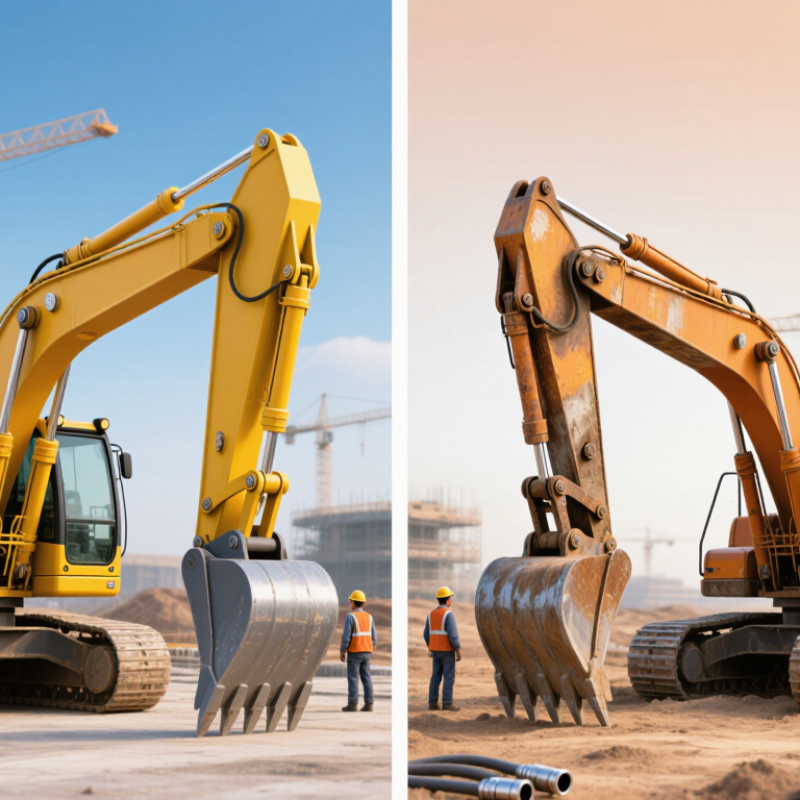
2026 Best Guide to Compare New vs Used Construction Equipment

What Defines New and Used Construction Equipment in 2026

2026 Best Guide to Compare New vs Used Construction Equipment

What Defines New and Used Construction Equipment in 2026

In 2026, new construction equipment generally means a machine that has not been put into regular field service. It arrives with current factory specifications, a documented delivery date, and often a manufacturer’s warranty. Used equipment has already worked, even if it looks freshly painted. Age alone tells little. A machine with low hours may still have sat outdoors, while a higher-hour unit may have consistent service records. New models may offer updated displays, efficiency features, or machine-monitoring systems, but these depend on the machine and configuration. New is not automatically better.

Tips: Ask for the serial number, hour-meter reading, maintenance history, and warranty terms. Inspect the machine cold, before it has been warmed up for a sale. Look for hydraulic seepage, uneven tire wear, cracked hoses, and loose pins. Test controls and attachments under load when possible. Small clues matter.

For a used machine, compare the records with visible wear and request an independent inspection if the purchase is significant. For new equipment, confirm exactly what is included, such as attachments, delivery, training, and scheduled maintenance. Check whether electronic features require a subscription or reliable cellular coverage. Availability of parts and service can affect downtime as much as purchase price. A clean inspection is reassuring, but it cannot predict every repair. Some uncertainty remains. Choose based on the work, support nearby, and costs over the machine’s expected service life.

How Purchase Costs and Ownership Expenses Compare

Buying new construction equipment usually means a higher purchase price, but the cost is easier to predict. A new machine may include a warranty and require fewer repairs during its early years. That can matter when a hydraulic leak or unexpected breakdown would leave a crew waiting. Financing, delivery, insurance, and attachments still add to the initial bill. The sticker price is only the start.

Used equipment can reduce the upfront expense and may suit buyers with limited workloads. Yet hours on the meter do not tell the whole story. Check service records, inspect hoses and pins, and test the machine under load. Budget for tires, filters, worn teeth, and possible repairs. A low price can become expensive fast. I have seen buyers focus too much on age and too little on maintenance history; that judgment is not always easy.

Tips: Compare estimated costs over the same ownership period, such as five years. Include fuel, routine service, repairs, financing, resale value, and expected downtime. Ask an experienced mechanic to inspect used equipment before purchase. For either option, match machine size to the job: an oversized excavator can burn more fuel, while an undersized one may extend a project. Keep a repair reserve, even for newer equipment. Something will eventually need attention.

How Equipment Age Affects Performance, Maintenance, and Reliability

2026 Best Guide to Compare New vs Used Construction Equipment

How Equipment Age Affects Performance, Maintenance, and Reliability

Age is a useful clue, not a verdict. A newer machine may offer consistent starts, tighter hydraulics, and fewer unplanned stops. Yet poor servicing can erase that advantage. On used equipment, inspect service records, hour-meter consistency, cold-start behavior, and metal particles in the hydraulic filter. Check undercarriage wear, hose cracks, and play in pins and bushings. These details often reveal more than paint or model year. A low-hour machine can still have a hard life.

Maintenance costs can rise when small faults go unnoticed. The U.S. Department of Energy’s Operations & Maintenance Best Practices guide estimates that reactive maintenance may cost three to four times more than preventive maintenance. This is a broad industrial estimate, not a construction-machine guarantee. Still, it explains why maintenance history matters: a missed oil change or leaking seal can become downtime, repair work, and lost production. Older machines may also require more frequent component checks, though careful servicing can keep them dependable. Age alone cannot predict reliability.

Tips: Compare maintenance logs with meter readings, then arrange an independent inspection under load. Ask the operator to cycle the boom, travel, and attachments. Listen for uneven engine noise and watch for slow hydraulic response. Budget for wear parts, not just the purchase price. An honest gap in the records is worth discussing; it is not proof of a bad machine.

How Financing, Warranties, and Resale Value Differ

New equipment often qualifies for longer financing terms and stronger factory coverage, but the lower monthly payment can hide higher total borrowing costs. Used machines may require a larger down payment or shorter term, especially when age, hours, or maintenance records raise lender concerns. ELFA’s 2024 Survey of Equipment Finance Activity reports that equipment financing supported about 57% of U.S. equipment investment in 2023. That scale matters: compare total interest, fees, and end-of-term value, not just the monthly figure. Read the fine print.

Warranty value depends on what is covered, for how long, and whether labor and travel are included. New machines typically begin with broader manufacturer coverage; used machines may have limited, remaining, or separately purchased protection. Get exclusions in writing. A field inspection should check hydraulic leaks, worn pins, tire condition, and cold-start behavior. EquipmentWatch’s Cost Recovery Report benchmarks ownership costs and depreciation by equipment type, a useful reminder that resale estimates should be machine-specific, not based on a broad “used equipment” average.

Resale value can offset a higher purchase price, but only if the machine is maintained and its history is documented. Keep service invoices, hour-meter readings, and repair notes together. Buyers discount uncertainty. Still, resale forecasts are not guarantees: local demand, machine configuration, and market timing can shift prices sharply. I would not treat a published residual estimate as a promise; compare recent sales for similar age, hours, and condition before setting a budget.

How to Choose Equipment Based on Project Needs and Budget

For a short project with uncertain demand, renting or buying used construction equipment may preserve cash. For daily, year-round work, new equipment can offer warranty coverage, predictable service intervals, and less downtime risk. Compare total ownership cost, not just the purchase price: include transport, fuel, maintenance, financing, and likely resale value. A used excavator may look affordable until worn tracks or hydraulic leaks require repairs. That risk is easy to underestimate.

The American Rental Association’s 2024 Rental Market Monitor projected U.S. equipment and event rental revenue of $78.7 billion in 2024, reflecting the scale of rental as a practical option. Use that market context, not as proof that renting always saves money. Estimate expected operating hours, then compare rental fees with ownership costs over the same period. Check service records, inspection results, parts availability, and delivery timing. A low-hour used machine can still have hidden wear. Budget estimates are imperfect; build in a repair allowance.

Tips: Match capacity to the actual task, such as lifting a specified load or digging to a measured depth. For a brief job, rental may avoid storage and resale hassles. For frequent use, compare a new machine’s warranty with a used unit’s inspection report. Get the numbers in writing.

2026 Guide: New vs. Used Construction Equipment

Compare acquisition cost before choosing equipment for your project. This illustrative planning range sets equivalent new equipment at 100%; used equipment is shown at 60–80%. Actual prices depend on machine type, age, condition, hours, and local market. For tight deadlines or intensive use, weigh inspection results, repair risk, warranty, and equipment availability alongside the purchase price.

FAQS

Is new construction equipment always more expensive to own?

It usually costs more upfront, but may include warranty coverage and need fewer early repairs. Add financing, delivery, insurance, and attachments to the estimate. The sticker price is only the start.

What should I inspect before buying used equipment?

Review service records and compare them with meter readings. Check hoses, pins, bushings, tracks, and hydraulic filters. Test the machine under load. Paint tells little.

Does a low hour-meter reading guarantee a reliable machine?

No. A low-hour machine may still have hidden wear or inconsistent records. Watch a cold start and listen for uneven engine noise. It can be hard to judge.

How can I compare new and used equipment fairly?

Compare costs across the same ownership period, such as five years. Include fuel, maintenance, repairs, financing, transport, resale value, and downtime. Keep the assumptions visible.

When might renting make more sense than buying?

Renting may suit a brief project or uncertain workload. Compare rental fees with ownership costs for the same expected operating hours. Delivery timing matters, too.

How does equipment age affect maintenance?

Older machines may need more frequent component checks, but age alone cannot predict reliability. Missed service can turn a small leak into costly downtime. Records matter.

How should I choose the right machine size?

Match capacity to the actual task, such as a measured digging depth or specified lifting load. An oversized machine may burn more fuel. An undersized one may slow the job.

Should I set money aside for repairs?

Yes. Budget for wear parts, such as filters, tires, and worn teeth. Keep a repair reserve, even for newer equipment. Something will need attention.

Conclusion

Choosing between new and used construction equipment in 2026 means weighing more than the initial price. New machinery may offer the latest features, predictable condition, and stronger warranty coverage, while used equipment can reduce upfront costs and help stretch a project budget. Compare the total cost of ownership, including financing, maintenance, repairs, fuel, and the equipment’s likely resale value.

Age and operating history can affect performance, reliability, and the frequency of repairs, so assess condition and service records alongside the purchase price. The best choice depends on project demands, expected hours of use, schedule, and available funds. To decide how to compare new vs used construction machinery, consider whether dependable long-term operation or lower initial investment matters more for your specific work.

Mason

Mason

Mason is a seasoned marketing professional with a deep expertise in the company's offerings and a passion for driving brand awareness. With a strong background in digital marketing strategies, he has an innate ability to connect with diverse audiences and effectively communicate product benefits.......