Buying industrial equipment in China can involve more than comparing prices and model numbers. Two machines may look nearly identical, yet differ in inspection, repairs, operating history, and after-sales support. One seller may describe equipment as refurbished after replacing worn parts and testing its functions. Another may use “used” for a machine sold largely as it stands. Labels alone can be unclear.
So, what is the difference between refurbished and used equipment? The answer depends on the work performed, the evidence provided, and the condition of the specific machine. A fresh coat of paint is not proof of a full refurbishment. Ask for dated inspection records, replaced-parts lists, test results, and clear photos of wear points. Small details matter.
This guide compares ten practical differences buyers may encounter when sourcing equipment in China, from repair scope and documentation to warranty terms and expected service life. It also explains what to verify before payment or shipment. Practices vary by seller and equipment type, so no label guarantees quality. Check the machine itself. Review the records. If details are missing, pause and ask why. A careful comparison may take extra time, but it can prevent costly surprises after delivery. One caveat: even thorough checks cannot predict every future breakdown.
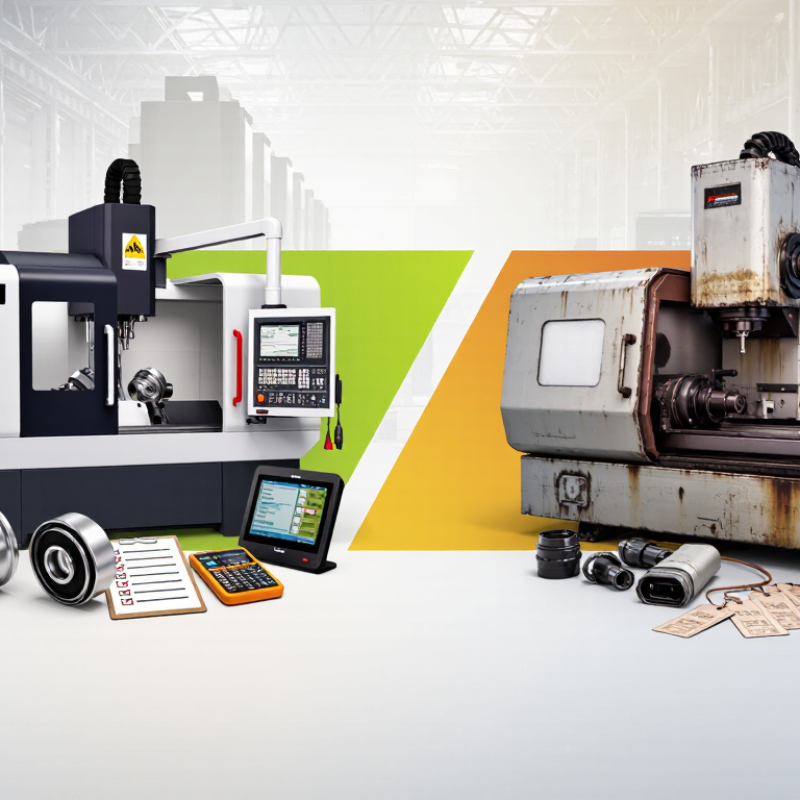
In China, “used equipment” usually means a machine that has had a previous owner and is being resold in its existing condition. Its history may be clear, incomplete, or somewhere in between. A used unit can still perform well, but age, operating hours, storage, and maintenance matter more than appearance. Used does not automatically mean unreliable.
“Refurbished” generally suggests that the equipment has been inspected and restored before sale. Work may include cleaning, replacing worn components, adjusting settings, and running functional tests. The scope varies between sellers, though. One seller may replace key parts; another may only repair visible faults. Ask for a written list of work completed, test records, and clear photographs of wear points. Do not assume refurbished means factory-new.
For a practical comparison, check the serial plate, operating-hour display, control panel, cables, and moving parts in person or through a live video inspection. Request details about included accessories, known defects, and available service support. Compare the quoted price with the cost of transport, installation, and likely repairs. Small details matter. A clean housing can hide a tired motor, and I would not treat a seller’s label as proof without supporting records. The terminology itself can be imperfect, so judge the machine by evidence and condition.
| No. | Comparison Dimension | Refurbished Equipment | Used Equipment | What to Verify in China |
|---|---|---|---|---|
| 1 | Meaning of the term | Usually refers to previously used equipment that has been inspected and repaired or restored before resale. The work included can vary. | Generally refers to equipment that has had a previous owner or period of operation and is resold, whether or not it has been repaired. | Ask the seller to define “refurbished” in writing and list the work completed; the label alone does not establish a uniform level of restoration. |
| 2 | Inspection and repair | May include a documented inspection and replacement or repair of selected worn or faulty parts. | May be sold as-is, with only basic cleaning or a limited inspection. | Request an inspection checklist, repair records, and a list of replaced parts. Confirm whether the inspection was performed by the seller or an independent service provider. |
| 3 | Testing before delivery | Often offered with a post-repair functional test, but the test scope and operating conditions vary. | Testing may be limited, performed only on selected functions, or not included in the sale. | Agree on a witnessed acceptance test covering the equipment’s key functions, operating parameters, and any relevant safety checks. |
| 4 | Appearance and condition | May have cleaned, repainted, or replaced exterior components; a refreshed appearance does not by itself prove internal condition. | Usually retains more visible signs of previous use, such as scratches, wear, or faded finishes. | Use dated photos or video and an itemized condition report. Inspect critical surfaces and components rather than relying on paint or appearance. |
| 5 | Wear parts and components | Some wear parts may have been replaced, but other components can remain original unless the scope specifies otherwise. | Existing wear parts and components are commonly sold in their current condition. | List the condition, age, and replacement status of key components, such as bearings, seals, motors, hydraulics, batteries, or cutting tools, as relevant to the equipment. |
| 6 | Service history and traceability | May come with refurbishment records in addition to available maintenance history. | Maintenance and operating records may be incomplete, particularly after multiple transfers of ownership. | Check available serial or asset identifiers against the nameplate and records. Request maintenance logs, repair invoices, operating hours, and ownership or transfer documents where available. |
| 7 | Warranty and after-sales support | A seller may offer a limited warranty on specified work or components; coverage is contractual, not automatic. | Warranty coverage may be absent or more limited, depending on the seller and transaction terms. | Confirm the warranty period, covered parts, exclusions, response process, labor and travel costs, and the location where service will be provided. |
| 8 | Price and value | Often costs more than a comparable as-is used unit because inspection or repair work may be included. | Often has a lower asking price, but the buyer may need to budget for inspection, repairs, or replacement parts. | Compare total ownership cost, including transport, installation, inspection, repairs, spare parts, and downtime—not just the purchase price. |
| 9 | Risk and uncertainty | Documented work and testing can reduce some uncertainty, but do not eliminate hidden defects or future failures. | Condition can be more uncertain when inspection, service records, or testing are limited. | For high-value or production-critical equipment, consider an independent pre-purchase inspection and include acceptance criteria and remedies in the contract. |
| 10 | Documents and compliance | Refurbishment may not update or replace the original technical, safety, or compliance documentation. | Original documents may be missing, outdated, or mismatched to the machine being offered. | Verify the nameplate, manuals, electrical and safety documentation, and any standards or regulatory requirements applicable to the equipment and its intended use in China. |
Note: “Refurbished” and “used” can be defined differently by sellers and equipment categories. The descriptions above are general buying considerations, not guarantees; confirm condition, refurbishment scope, testing, warranty, and compliance requirements in the sales contract.
Used equipment has prior ownership, but its repair level may be unclear. Refurbished equipment should have documented inspection and repair work. The label alone proves little.
Look for named components, service dates, measurements, replaced parts, and unresolved faults. “Motor checked” is vague. Bearing clearance and operating temperature are more useful.
Ask for results under a realistic workload. Depending on the machine, check pressure, output, temperature, vibration, or cycle consistency. Details matter.
Yes. Compare the readings with stated acceptance limits and relevant safety requirements. Confirm the serial number matches the machine offered. A clean report cannot guarantee future performance.
For costly equipment, I would arrange one. Short tests can miss faults that appear after extended use. I might be overly cautious, but downtime is expensive.
Not always. Documented testing may justify the extra cost when production downtime is costly. A verified used machine could still fit better.
Check seals, wiring, oil leaks, dust, uneven paint, and unusual vibration during operation. These signs deserve questions, not automatic rejection.
Longer equipment life can help conserve resources, but refurbished does not automatically mean greener. Ask whether critical parts are available locally and how the machine can be handled at end of life. Small details matter.
When comparing refurbished and used equipment in China, the key question is: what is the difference between refurbished and used equipment? Used equipment is generally sold in the condition it was in when its previous owner stopped using it, though it may receive basic cleaning or maintenance. Refurbished equipment typically undergoes a more thorough process, which may include inspection, repair, replacement of worn components, and functional testing. These steps can improve its condition and help it perform more consistently, but the level of refurbishment varies, so buyers should ask what work was completed and request supporting records.
The two options can also differ in inspection standards, price, warranty, and after-sales support. Used equipment is often less expensive, while refurbished equipment may cost more because of the additional work and support included. Before choosing, compare the equipment’s age, operating history, test results, warranty terms, and availability of future service. The right choice depends on your budget, intended use, tolerance for maintenance needs, and the seller’s ability to clearly document the equipment’s condition.

 Prizor Excavator